
Miguel Hernandez University of Elche
If you are the contact person for this centre and you wish to make any changes, please contact us.
Nutritionist and Doctor of Public Health from Miguel Hernández University in Elche. Member of the Sports Nutrition Research Group at Alfonso X El Sabio University.
Associate Professor in the Department of Health Psychology at Miguel Hernández University of Elche and researcher at the Center for Research on Childhood and Adolescence
Director of the Nutrition and Bromatology research group.
Full professor at the Miguel Hernández University, specialising in Pharmacology and pain, coordinator of the SED Bioethics working group and coordinator of the Neuropharmacology applied to pain research group of the ISABIAL Foundation
Director of the Institute of Neurosciences, a joint centre of the Miguel Hernández University of Elche (UMH) and the CSIC
Professor and vice-director of the Institute for Research, Development and Innovation in Health Biotechnology of Elche (IDiBE) of the Miguel Hernández University
Researcher in the Biomedical Neuroengineering group at the Miguel Hernández University (UMH) of Elche
Director of the Institute of Bioengineering at the Miguel Hernandez University of Elche and director of the Biomedical Neuroengineering group at the Center for Biomedical Research Network on Bioengineering, Biomaterials and Nanomedicine (CIBER-BBN)
Postdoctoral Researcher, Department of Applied Biology.
Professor of Nutrition at Miguel Hernández University in Elche.
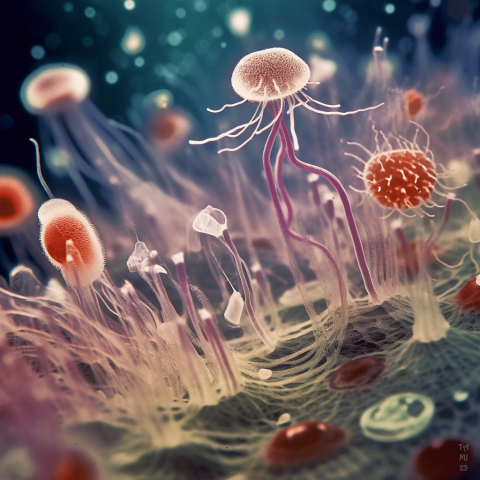
An international team has discovered a new type of molecular fossil in sedimentary rocks from the mid-Proterozoic - which spans from 2.5 billion to 542 million years ago. Protosteroids, a type of lipids found in abundance in those rocks, indicate that eukaryotes were a dominant life form in aquatic environments between 1.6 billion and 800 million years ago, the authors explain in Nature. The finding would confirm the theory of Nobel laureate Konrad Bloch, who predicted the existence of these primordial molecules.

A few weeks ago, the European Food Safety Authority (EFSA) said that exposure to bisphenol A through food is a risk to human health. The agency recommended a much lower tolerable daily intake dose than it had its own previous recommendations. In this explainer, we review key facts and documents to cover this issue--which will continue to make the headlines in months and years to come.

In 2018, a regulation was introduced in Scotland that establishes a minimum sale price for alcoholic beverages, proportional to the amount of alcohol they contain. A study has analysed the health impact of this measure. According to the authors, alcohol-related mortality has decreased by 13% since then, especially among the most disadvantaged socio-economic classes. The results are published in the journal The Lancet.

Previous research has shown that coffee drinking is associated with a lower risk of cardiovascular disease, but most are short-term, observational studies - they describe associations without being able to determine cause and effect. Research published in BMJ Medicine uses another method (Mendelian randomisation) to study potential causal relationships between caffeine levels in plasma and cardiovascular health, using genetic variants in nearly 10,000 people who participated in long-term studies. Higher genetically-predicted caffeine concentrations in plasma were associated with lower body-mass index and fat mass and a lower risk of type 2 diabetes. In addition, the research shows that 43% of the protective effect of caffeine on the risk of type 2 diabetes was influenced by a reduction in body mass index.
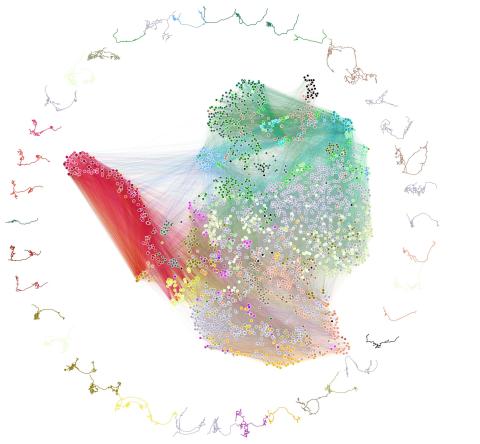
Researchers have presented the first connectome - a diagram of neural connections - of the whole brain of an insect, a vinegar fly larva (Drosophila melanogaster). The work, which the authors say will inspire new studies of neural circuits and machine learning architectures, is published today in Science.

Available studies show no difference in the risk of different types of fracture between those who take calcium supplements and those who do not, according to a report by the Iberoamerican Cochrane Centre via Nutrimedia. According to the report, these supplements have side-effects and do not provide benefits in the general population and are therefore only recommended for people living in residential homes or other institutions.
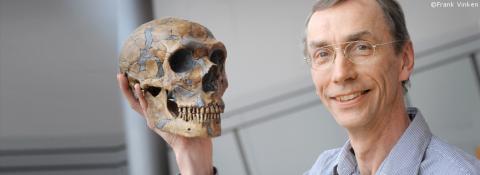
The Karolinska Institute has awarded the Nobel Prize in Medicine or Physiology to Swedish biologist Svante Pääbo, a specialist in evolutionary genetics, for his discoveries on the genomes of extinct hominids and human evolution.

In an interview on TV3's Els Matins, the Catalan government's health minister Josep Maria Argimon explained that they are preparing a regulation to ban smoking on bar terraces and make them "smoke-free spaces". They are also considering adding canopies and the entrances and exits of schools to the ban.
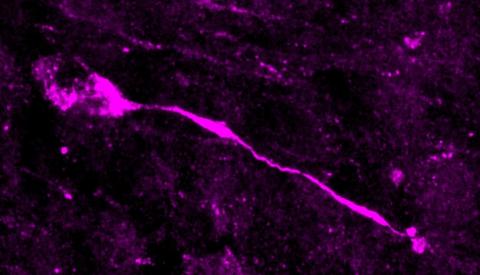
A single amino acid change in a protein (TKTL1) may have given modern humans an advantage over their older contemporaries, such as Neanderthals, by allowing greater neocortical neuronal formation, according to research published in Science.

The draft Animal Protection Bill has just been approved by the Council of Ministers, awaiting ratification in Congress. The authors consider that the text includes improvements compared to its first version, but consider that it still contains negative aspects.