Geological Survey of Spain (IGME-CSIC)
If you are the contact person for this centre and you wish to make any changes, please contact us.
Senior scientist at the Geological Survey of Spain (IGME-CSIC)
Director of the Water and Global Change Department
Scientific researcher in the Water and Global Change Department of the Geological and Mining Institute of Spain (IGME-CSIC)
Researcher in the Water and Global Change Department of the Geological and Mining Institute of Spain (IGME-CSIC)
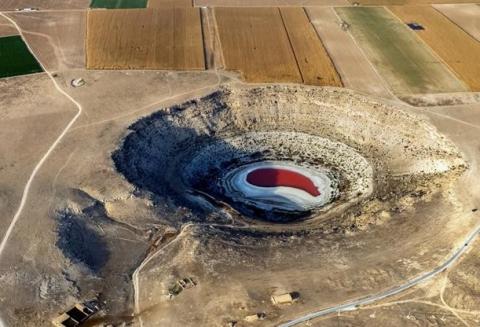
A new report from the United Nations University Institute for Water, Environment and Health (UNU-INWEH) toughens the discourse on the current water emergency by referring to an era of "global water bankruptcy". According to the report, the terms "water stress" or "water crisis" are no longer sufficient, as we find ourselves in a situation that goes beyond a temporary crisis, characterised by irreversible losses of natural water resources and the inability to return to historical levels. The report points out that, although not all basins are in water bankruptcy, "enough critical systems around the world have crossed these thresholds" and are interconnected through trade, migration, climate or geopolitics.
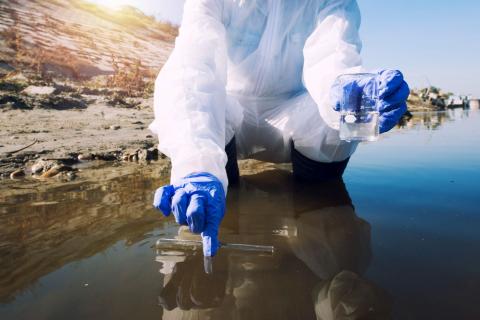
According to a report published yesterday in The New York Times, most of the members of the Subcommission on Quaternary Stratigraphy had rejected the proposal to declare the beginning of the Anthropocene, thus showing their opposition to the idea that this is a new geological epoch. Other sources told El País that the result of the vote was not formally confirmed. If this proposal is defeated, the process could be restarted from scratch at a later date.
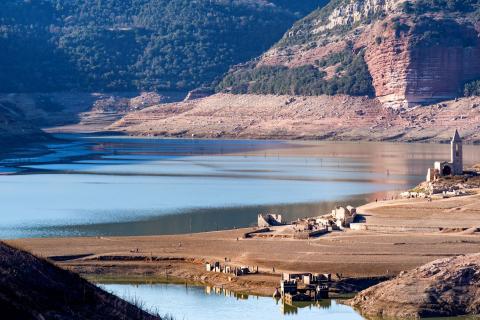
In 2010, nearly 1,000 sub-basins around the world were facing water shortages. But when considering not only water quantity, but also water quality, this figure rises to more than 2,500, according to a study published in Nature Communications. By 2050, the authors estimate that up to a third of sub-basins will face severe shortages of clean water, which could affect 3 billion people. Southern China, Europe, North America and Africa will be the most affected regions.
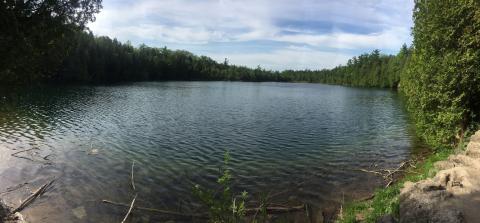
The Anthropocene Working Group of the International Commission on Stratigraphy has proposed Crawford Lake in Canada as a reference site for studying the Anthropocene as a possible geological epoch. This proposal for a Global boundary and Stratotype Section and Point (GSSP) was presented today at the International Congress of Stratigraphy in Lille, France. It is a necessary, but not sufficient step for the Anthropocene to enter the International Chronostratigraphic Table, the worldwide reference for geological units. Once approved by the AWG, this proposal has to go through three more votes in international geological bodies.
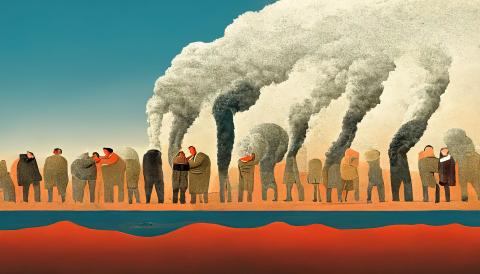
The term Anthropocene describes the profound changes on Earth due to human activities in the past decades. The concept comes from geology but has spread to other areas and has sparked controversy within science. In this article, we provide some keys to understand what the Anthropocene is, and why there has been debate in recent days surrounding its possible declaration.