
CSIC Delegation in the Region of Valencia
If you are the contact person for this centre and you wish to make any changes, please contact us.
Director of the Institute of Neurosciences, a joint centre of the Miguel Hernández University of Elche (UMH) and the CSIC
Researcher at the Institute of Molecular and Cellular Biology of Plants (UPV-CSIC)
Professor of Theoretical Physics at the Institute of Corpuscular Physics (IFIC), University of Valencia - CSIC
Researcher at the Climate, Atmosphere and Oceans Laboratory (Climatoc-Lab) at the Desertification Research Centre (CIDE, CSIC-UV-GVA)
Senior Scientist in Social Sciences at INGENIO (CSIC-UPV)
CIDEGENT Distinguished Researcher
Researcher, Instituto de Física Corpuscular
Professor of the Department of Theoretical Physics & IFIC of the University of Valencia - CSIC
Coordinator of the CSIC Global Health Platform and researcher at the Instituto de Biomedicina de Valencia (IBV-CSIC)
CSIC Group Leader at the Institute of Neurosciences (CSIC-UMH)

Early this morning, the Minister of Interior, Fernando Grande-Marlaska, declared a state of emergency of national interest in the Community of Madrid and the province of Ávila due to the forest fires in Villa del Prado, San Martín de Valdeiglesias and Burgohondo. According to Carlos Novillo, the Regional Minister for the Environment, Agriculture and the Interior of the Community of Madrid, the fires were beyond the capacity of the fire services to extinguish and posed a serious threat to the population. The Madrid 112 Security and Emergency Agency has reported that, although the night-time firefighting efforts have been effective, the fires have still not been contained or brought under control. More than 10,000 people remain evacuated.

An article published in Brain Health proposes using the concept of the ‘criticome’ to refer to the sensory, motor, social, cultural and environmental information recorded from pregnancy up to the age of 25, which is the period of greatest brain plasticity. According to the authors, this concept reframes autism, schizophrenia and depression as developmental disorders rather than purely synaptic disorders. Besides, they say this approach would have implications for educational policy, mental health care and screen use, amongst other issues.
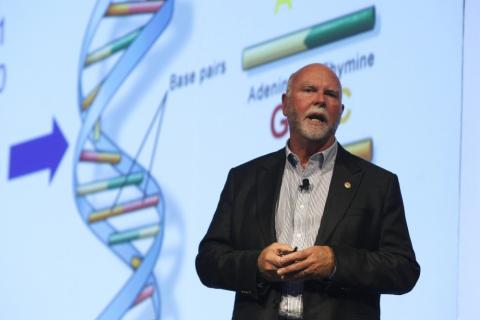
Craig Venter, the American biologist and entrepreneur who founded Celera Genomics to launch his own Human Genome Project in 1999 outside the public consortium, died Wednesday in San Diego at the age of 79, according to a statement from the J. Craig Venter Institute, which he led. Among other achievements, Venter completed the first full sequencing of a living organism’s genetic material and announced that he had succeeded in creating synthetic life.

A US team analyzed the genetic activity of individual brain cells from 15 men and 15 women and found 133 genes that showed consistent differences. Although biological sex explained only a small part of the differences they found when comparing all the brains, variants in many of these genes have been associated with neuropsychiatric and neurodegenerative disorders—such as ADHD, schizophrenia, depression, and Alzheimer's—suggesting that sex differences could play a role in the distinct risk men and women have of developing certain diseases. The authors, however, acknowledge that the sex-related differences in their study could stem from differences in socialization and experience. The results are published in Science.
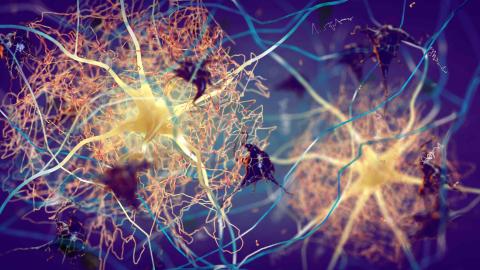
A review of studies conducted by the Cochrane Collaboration analyzed data from 17 clinical trials involving more than 20,000 participants who had been treated with amyloid-targeting drugs—such as lecanemab or donanemab—at a relatively early stage of Alzheimer’s disease. Results at 18 months of treatment show that “the absolute effects on cognitive decline and the severity of dementia were nonexistent or negligible, falling well below the thresholds established for a clinically meaningful difference,” according to a press release. Furthermore, the review concludes that these drugs likely cause more brain inflammation and microbleeds than the placebo.

A clinical trial (COSMOS) involving 958 healthy adults with an average age of 70 tested the ability of a multivitamin supplement, together with cocoa extract, to slow ageing. The results, published in Nature Medicine, show that the supplement slightly slowed two of the five biological markers of ageing measured after two years of daily use. The two markers affected were PCPhenoAge and PCGrimAge, whose rate of increase was reduced by 2.6 months and 1.4 months respectively. The slowing effect was greater among participants who initially showed more accelerated ageing. Cocoa showed no effect.
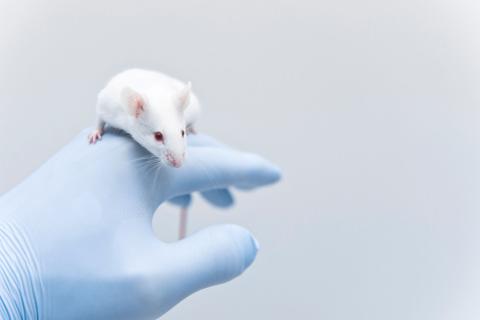
CAR-T cells, T lymphocytes modified in the laboratory to attack tumor cells, have shown promise against certain types of cancer. Now, a US team has followed the same concept and introduced artificial receptors into astrocytes, a type of nerve cell, with the aim of reducing the amyloid plaques characteristic of Alzheimer's disease. The experiments, conducted in mice, showed a significant reduction in amyloid, although no changes in the animals' behavior were observed. The results are published in Science.

Science journal has published a global map showing exposure to perfluoroalkyl and polyfluoroalkyl substances (PFAS) through the consumption of fish products. PFAS are substances that are difficult to break down, meaning they can accumulate in the body, and some are linked to health problems. The authors collected data over 20 years from PFAS measurements in the marine environment and fisheries, and mapped the concentrations of these compounds in more than 200 species of marine fish. The study shows that international fish trade redistributes the risk of PFAS exposure from highly polluted regions to less exposed areas, with European trade playing a key role in increasing the risk of exposure to these substances.

A team from the United States has used data from health studies to analyze the extent to which prestigious journals capture or ignore science considered influential. Their findings indicate that most of the most cited articles—thus considered most influential—are published in journals not ranked among the most prestigious. According to the study, approximately half of all researchers never publish in a journal with an impact factor above 15, which, according to certain evaluation systems, could exclude them from opportunities. However, overall, traditional journal-based measures may only recognize between 10% and 20% of influential work. The results are published in Plos Biology.

Consuming up to four cups of coffee a day is associated with an increase in telomere length in people with severe mental disorders, such as schizophrenia or bipolar disorder. Telomere length is an indicator of cellular ageing and is shorter in people with these disorders, although the causes are not clearly understood. According to the study, published in BMJ Mental Health, the effect shown is comparable to ‘a biological age five years younger’ in coffee drinkers.