Clínic Hospital
If you are the contact person for this centre and you wish to make any changes, please contact us.
Head of the Cardiology Department at the Hospital Clínic de Barcelona and researcher at the National Centre for Cardiovascular Research (CNIC) and at the August Pi Sunyer Biomedical Research Institute (IDIBAPS)
Senior Consultant at the Department of Preventive Medicine and Epidemiology at Hospital Clínic in Barcelona, Professor of Public Health and Dean of the Faculty of Medicine and Health Sciences at the University of Barcelona
Neurologist at the Hospital Clínic in Barcelona
Head of Microbiology at Hospital Clínic in Barcelona, associate professor at the University of Barcelona, and researcher at ISGlobal Barcelona
Psychiatrist and researcher at the Bipolar and Depressive Disorders Unit of the Hospital Clínic de Barcelona
Head of the Arrhythmias and Physical Activity research group at IDIBAPS, cardiac electrophysiologist at Hospital Clínic Barcelona, associate professor of Medicine at the University of Barcelona and researcher at CIBERCV.
Professor of Psychiatry at the University of Barcelona, Head of the Psychiatry and Psychology Department at Hospital Clínic in Barcelona, and researcher at the Biomedical Research Centre in Mental Health (CIBERSAM)
Neurologist at the Neuroimmunology Unit of the Neurology Department at Hospital Clínic de Barcelona
Psychiatrist and researcher at the Depressive and Bipolar Disorders Unit of the Hospital Clínic de Barcelona

The American Psychiatric Association has unveiled the new features of the forthcoming Diagnostic and Statistical Manual of Mental Disorders (DSM) in five articles published in The American Journal of Psychiatry. Among the highlights are the proposed change of name — it will become the Diagnostic and Scientific Manual — and the intention for it to be more dynamic, incorporating biomarkers for diagnosis and integrating the socioeconomic, cultural and environmental determinants of health. According to the authors, the aim is to enable a more personalised and inclusive clinical practice, aligned with scientific rigour. The most recent update was published in 2022 with the DSM-5-TR, and specialists are currently unaware of the date of the next edition, as they reported during a briefing with journalists.

A meta-analysis published in The Lancet Psychiatry journal concludes that the most effective way to discontinue antidepressant treatment in people with remitting depression is to gradually reduce the dose in combination with psychological therapy. Furthermore, this strategy proved to be just as effective in preventing relapses into depression as continuing medication. The study was based on data from more than 17,000 adults with depression and anxiety in remission, although the evidence for the latter disorder was not as robust.
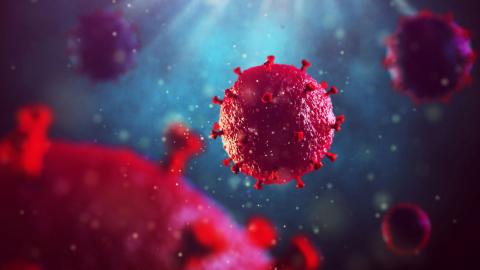
Stem cell transplants in cancer patients have achieved complete remission of HIV in a few cases in people who are also HIV-positive. However, in most cases, the donors were homozygous—with two identical copies of the gene—for a mutation in the CCR5 gene that is considered protective against the virus. A German team has now reported a new case of remission in a 60-year-old man with leukemia—called the “second Berlin patient”—in which the donor was heterozygous (only one of the two copies contained the mutation), which could broaden the alternatives. The results are published in the journal Nature.

Consuming up to four cups of coffee a day is associated with an increase in telomere length in people with severe mental disorders, such as schizophrenia or bipolar disorder. Telomere length is an indicator of cellular ageing and is shorter in people with these disorders, although the causes are not clearly understood. According to the study, published in BMJ Mental Health, the effect shown is comparable to ‘a biological age five years younger’ in coffee drinkers.
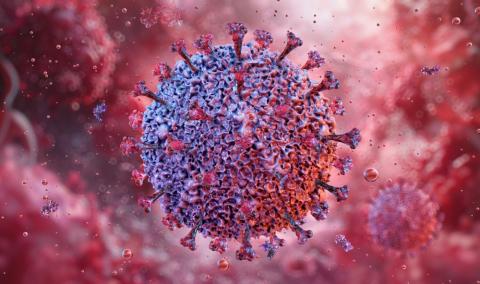
The Epstein-Barr virus, which causes mononucleosis, or the kissing disease, is present in approximately 95% of adults. Recent studies have confirmed its link to the vast majority of multiple sclerosis cases. Now, a US team has uncovered a mechanism that would also establish its connection to the development of systemic lupus erythematosus. “We believe it applies to 100% of cases of the disease,” the authors state, publishing their results in the journal Science Translational Medicine.

While preparing a systematic review of animal studies on subarachnoid hemorrhage —a particular type of stroke— a Dutch team detected suspicious images and redirected their research: they analyzed 608 publications considered relevant, looking for potential problems with their results. Their findings indicate that 243 (40%) contained duplicate or potentially manipulated images, raising doubts about their reliability. The vast majority (87%) originated in China, and only 22% had been corrected. According to the researchers, these findings “could explain why, despite hundreds of animal studies published in this field, we still lack effective treatments for early brain injury in patients with hemorrhagic stroke”. The results are published in Plos Biology.

Different antidepressant drugs cause different side effects in the body, in parameters such as heart rate, blood pressure or body weight, according to a meta-analysis published by The Lancet. For example, agomelatine administration is associated with weight loss, while other molecules such as maprotiline are associated with weight gain. The research brings together 151 studies and 17 reports from the US Food and Drug Administration (FDA), including more than 58,000 people and comparing 30 antidepressant drugs with a placebo.
Antiretroviral therapy has become a vital treatment for people with HIV. However, it is not a cure, because the virus is able to take refuge and hide in certain blood cells. Now, a study of 65 people—30 women and 35 men—who were undergoing this therapy has found that women's immune systems tend to be more effective at controlling the virus. According to the researchers, who published their findings in the journal Science Translational Medicine, the study ‘reinforces the importance of considering sex in the design and implementation of medical interventions aimed at cure and suggests that women may be better candidates for exploring innate immunity-dependent strategies.’

Until now, perceived well-being followed a U-shaped curve depending on age, declining – due to worry, stress or depression – until people reached middle age, around 50, and then rebounding into old age. With malaise, the U is inverted and we talk about the ‘unhappiness curve’, shaped like a hump. Now, research published in PLOS One with data from the US and the UK claims that this age-related malaise is declining and that there is no longer such a hump. The reason for the change is said to be the deterioration of mental health among young people, especially those under 25. The study also includes data from 44 countries between 2020 and 2025, including Spain, and confirms that the malaise no longer takes the form of a hump, but decreases with age.
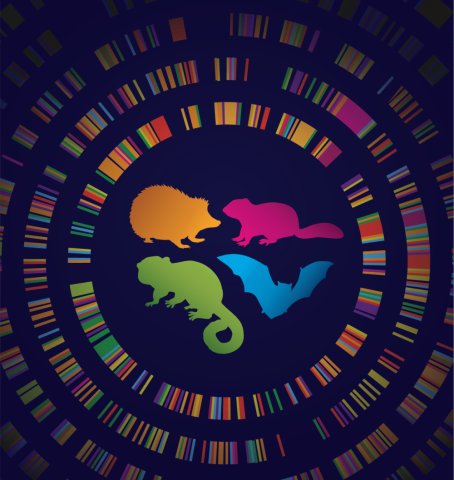
At least some of the genes that enable hibernation in certain animals are also found in our DNA, but they are regulated differently. Now, researchers at the University of Utah (United States) have analyzed the human genome and identified specific regions and changes that affect this regulation, which could be useful in the future to take advantage of some of its benefits. According to the researchers, who share their findings in two papers published simultaneously in the journal Science, "there is a possibility that, by understanding these mechanisms, we may find strategies to intervene and help with age-related diseases and improve our own health".