CIBERER
If you are the contact person for this centre and you wish to make any changes, please contact us.
Gemma Marfany, Professor of Genetics at the University of Barcelona (UB) and a member of CIBERER, IBUB-IRSJD
Research professor at the National Biotechnology Centre (CNB-CSIC) and at the CIBERER-ISCIII
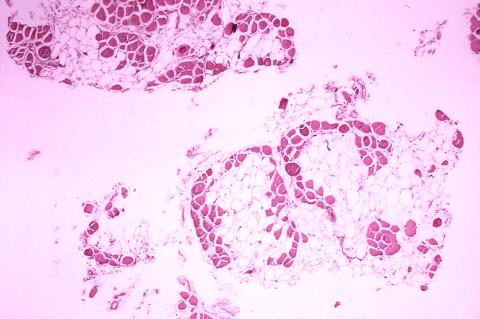
Duchenne muscular dystrophy (DMD) is a serious genetic condition that causes progressive muscle weakness and atrophy, including of the heart. There is currently no cure, and it mainly affects boys and young men. A cell therapy called Deramiocel could slow down muscle weakness in children and young people with advanced-stage DMD, according to a phase III clinical trial published in The Lancet, the first of its kind. The study involved 106 children and young people aged between 10 and 22 with advanced DMD. According to the results, after one year, participants who received the drug lost mobility in their arms 54 per cent more slowly than those in the placebo group, although this did not result in a clear difference in the heart’s ability to pump blood.

In 2025, a six-year-old Chinese girl named Mei (not her real name) became the first person in the world to undergo gene-editing therapy targeting the brain. She had a developmental delay associated with a rare genetic syndrome, Snijders-Blok-Campeau syndrome. According to Science, her parents had raised $860,000 to partially fund the treatment at Xinhua Hospital in Shanghai (China), led by Zilong Qiu, one of the neuroscientists competing to apply base editors — a version of CRISPR — in children with rare diseases. Now, Science and Retraction Watch have exclusively revealed that Mei died from a severe immune reaction seven days after receiving the treatment, a story that had been kept hidden. The entry on clinicaltrials.gov has not been updated since 2025; and when Qiu and his team published animal studies related to the trial in the journal Nature in early 2026, according to the journalistic investigation, they omitted any reference to Mei and her family.
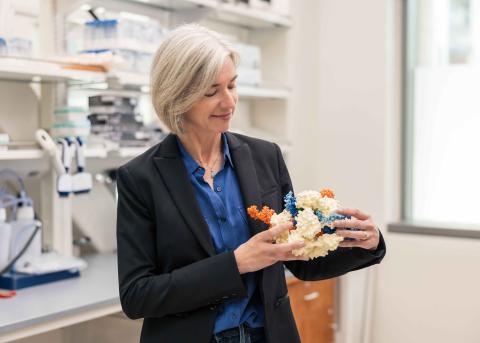
The range of CRISPR tools for genome editing can extend beyond nature-inspired designs thanks to proteins designed using artificial intelligence. A new study by Nobel laureate Jennifer Doudna’s team, published in Science, describes the design of synthetic RNA-guided nucleases, with sequences substantially different from those found in nature, which match or exceed the activity of their natural counterparts whilst offering novel properties.
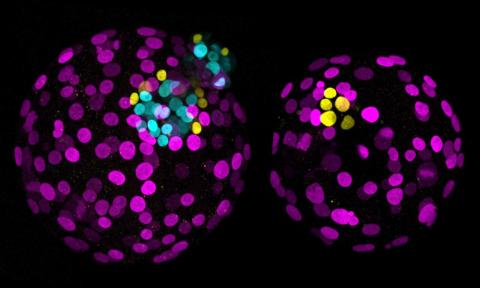
An article published in Nature describes how the first use of precision editing has shed light on a gene essential for embryonic development. The authors caution that the clinical application of genome editing in human embryos requires rigorous ethical analysis and oversight, as well as broad public debate and support.
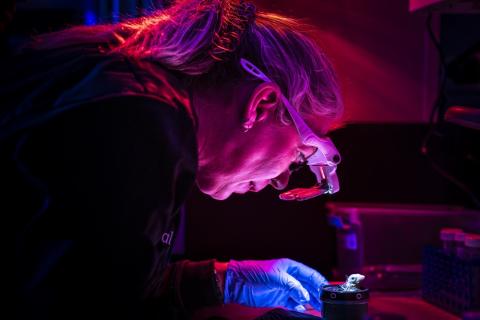
The US company Colossal Biosciences claims to have successfully incubated a bird in an artificial egg system until it hatched. In a press release, the company states that this technology allows a bird embryo to develop fully outside the shell of a biological egg, and could be used to bring back extinct bird species such as the giant moa from New Zealand’s South Island.
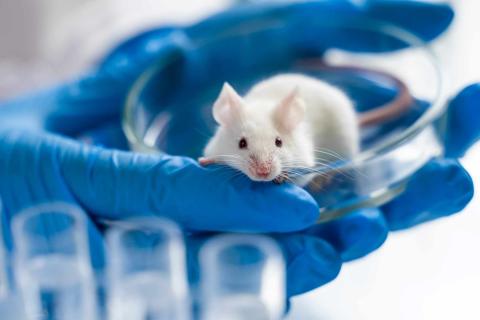
A team from the United States analyzed 611 samples from 341 model mouse strains stored at the Mutant Mouse Resource and Research Centers (MMRRC), a research resource network supported by the National Institutes of Health (NIH). By comparing the identity of each strain with its actual genetic profile, they found that approximately half of the samples showed discrepancies. Although the expected engineered mutation was generally present and many inconsistencies were relatively minor, some had the potential to compromise the validity and reproducibility of the experiments by introducing hidden genetic variables that could alter biological outcomes. The findings are published in Science.

Repeated cloning cannot be sustained indefinitely in mammals, according to the findings of a twenty-year study on mice conducted in Japan. Serial cloning of mice led to an accumulation of lethal DNA mutations that affected birth rates from the 27th generation onwards, with the 58th generation being the last, according to the article published in Nature Communications, showing that sexual reproduction is necessary to prevent large-scale genetic mutations.
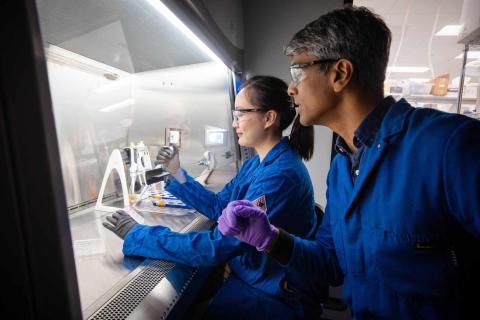
The so-called 'dark transcriptome' consists of non-coding RNA, i.e. RNA that does not provide instructions for building proteins. A study published in the journal Science Signaling used long non-coding RNAs (lncRNAs) and modified them to attenuate acute inflammation in mice and human cells. The authors are confident that this could open up a new field of therapeutic development.
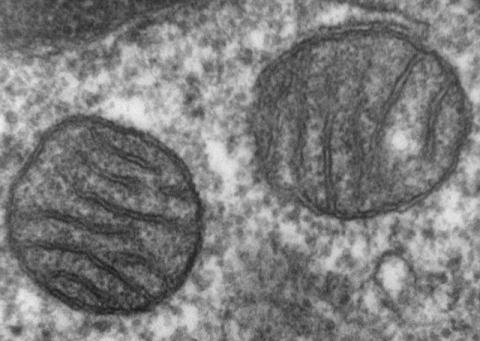
In 2015, the United Kingdom became the first country to pass legislation allowing the use of mitochondrial donation technology, pronuclear transfer. The technique is designed to limit, through in vitro fertilization, the transmission of mitochondrial DNA diseases in babies born to women who are at high risk, and for which there is no cure. Two studies published in the New England Journal of Medicine (NEJM) describe the results of the first treatments performed to date, from which eight babies have been born by mitochondrial donation, with reduced risk of disease.
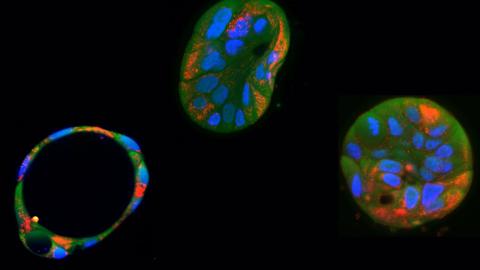
A team from the Netherlands has successfully edited pathogenic mutations in mitochondrial DNA in human cells, changes in DNA that cause disease, according to research published in PLoS Biology. The authors used a genetic tool known as a base editor. Until now, techniques derived from CRISPR have made it possible to correct mutations in nuclear DNA, and new techniques are being developed that allow mitochondrial DNA to be edited.