Center for Animal Health Research (CISA)
If you are the contact person for this centre and you wish to make any changes, please contact us.
Senior scientist at the CSIC at the Animal Health Research Centre (CISA), National Institute for Agricultural and Food Research and Technology (INIA)
Head of the Epidemiology and Environmental Health research group at CISA, INIA-CSIC.
Researcher in the Department of Infectious Diseases and Global Health at the Centre for Animal Health Research CISA-INIA, CSIC
Scientist in the Epidemiology and Environmental Health research group at CISA, INIA-CSIC.
Researcher at the Centro de Investigación en Sanidad Animal (CISA-INIA/CSIC)
Senior Scientist at the Animal Health Research Centre (CISA) of the National Institute for Agricultural and Food Research and Technology (INIA-CSIC)

According to the newspaper El País, the Catalan Regional Government has reported a case of swine flu —not swine fever, which is caused by another virus and does not affect humans— in an 83-year-old person in the province of Lleida. The newspaper points out that, as the patient had no contact with pigs that could transmit the virus, they may have been infected by another person.
The North American strain of the H5N1 avian influenza virus has been shown to be capable of causing outbreaks in mammals such as cows, something not seen elsewhere in the world, including Europe. An international team has identified and tested two mutations in ferrets that may explain improved adaptation and greater virulence. According to the authors, who published the results in the journal Science Advances, the finding "highlights the urgent need for strengthened surveillance and targeted interventions.
Avian influenza has returned to Spain this summer. In addition to a few cases in wild birds, since 18 July there have been several outbreaks in poultry in different autonomous communities, causing the country to lose its disease-free status. To answer questions about the situation, its possible causes, evolution and consequences, SMC Spain organised an information session with researchers Inmaculada Casas, Ursula Höfle and Elisa Pérez Ramírez.
US Department of Health Secretary Robert Kennedy Jr's proposal to let bird flu spread in turkeys and chickens to identify surviving animals would be "dangerous and unethical", a group of scientists warns in a policy forum article published by Science. In addition to the suffering of infected animals, allowing a highly lethal, rapidly evolving and contagious virus to follow a natural course of infection "would prolong exposure for farmworkers, which could increase viral adaptation and transmission risks for poultry, other peridomestic animals, and humans," they warn.
A team in the US has tested the efficacy of baloxavir, an antiviral already on the market for treating common flu, against avian influenza in mice. The results, published in the journal Nature Microbiology, show that it is more effective than the currently recommended oseltamivir (Tamiflu) except when the infection is via the mouth, in which case it is equally effective. According to the authors, baloxavir ‘could be considered for the potential treatment of serious H5N1 virus infections in humans’.

In a new study in mice published in Science, researchers present CHARM, an epigenetic editor that can be used to silence prion protein throughout the brain. The tool offers a path to effective first-line treatment for patients with fatal prion diseases, as well as other neurodegenerative diseases caused by the toxic accumulation of unwanted proteins.
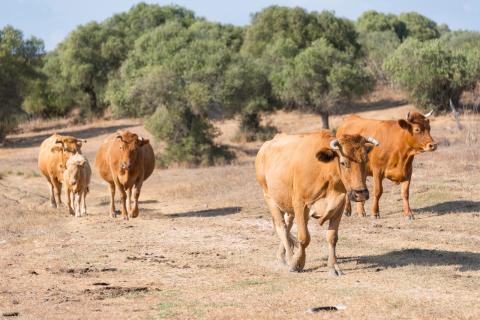
Since the first case of epizootic haemorrhagic disease (EHD) in Spain was detected in cattle in November 2022, it has spread among farms in several autonomous communities in dozens of outbreaks. The mosquito-borne disease does not affect humans, but has the potential to cause economic losses.

According to a statement issued Monday by the World Health Organisation (WHO), Poland has reported that "unusual" cat deaths have been found in several areas of the country. Of the 47 samples tested (46 from cats and one from a caracal, another type of feline), 29 were positive for the avian influenza A(H5N1) virus. The surveillance period for all contacts has now ended and no contacts have shown symptoms. According to WHO, "sporadic A(H5N1) infections of cats have been reported previously, but this is the first report of a large number of infected cats in a large geographical area within a country".
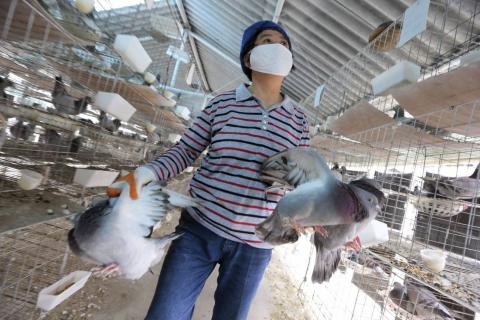
In the first months of 2022, avian influenza has hit birds in Spain with unprecedented intensity. All outbreaks are now closed and the epidemiological situation is favourable, but we must not let our guard down. The risk of the virus jumping to humans is considered low.