Bellvitge Biomedical Research Institute (IDIBELL)
If you are the contact person for this centre and you wish to make any changes, please contact us.
ICREA Research Professor and Coordinator of the Regenerative Medicine Programme at the Bellvitge Biomedical Research Institute (IDIBELL), member of CIBER-BBN, Director of the Clinical Translation Programme in Regenerative Medicine in Catalonia, and Professor of Physiology at the University of Barcelona.
Lecturer of the Department of Social Psychology and Quantitative Psychology at the University of Barcelona, researcher at the Bellvitge Biomedical Research Institute (IDIBELL) and CIBERSAM
Head of the Hereditary Cancer Research Group at the Catalan Institute of Oncology-IDIBELL
Coordinator of the Neuro-oncology Unit of the Bellvitge Biomedical Research Institute (IDIBELL) and researcher of the Neuroplasticity and Regeneration Group of the Autonomous University of Barcelona
Principal investigator, Digital Health Programme ICOnnecta't, and member of the Group of Psycho-oncology and Digital Health at IDIBELL
Head of the Cancer Virotherapy Group at the Bellvitge Biomedical Research Institute (IDIBELL).
Head of Medical Oncology at the Catalan Institute of Oncology (ICO), head of the Colorectal Cancer Research Group, Oncobell programme (IDIBELL) and associate professor of Medicine at the University of Barcelona
Principal Investigator of the Nutrition and Cancer Unit of the Catalan Institute of Oncology (ICO) and the Bellvitge Biomedical Research Institute (IDIBELL)
Emeritus researcher at the Catalan Institute of Oncology (ICO), senior researcher at the Bellvitge Biomedical Research Institute (IDIBELL) and lecturer in the Faculty of Health Sciences at the Universitat Oberta de Catalunya (UOC)
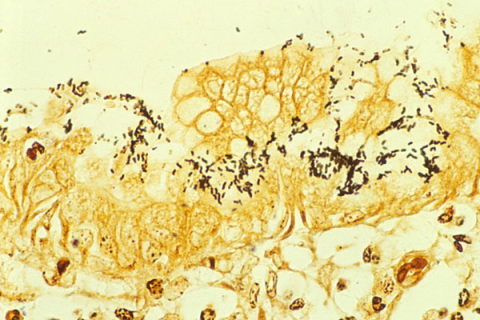
Infection with the bacterium Helicobacter pylori is a known risk factor for stomach cancer. Its link to colorectal cancer, however, remains an unconfirmed hypothesis. An international team has reviewed 43 studies on this subject and found that 22 per cent of colorectal cancer cases could potentially be linked to this infection, although when they selected the 14 most reliable studies, the figure fell to 12 per cent. According to the authors, exposure to Helicobacter pylori could be contributing significantly to the number of cases of colon cancer worldwide, but they point out that their study is only exploratory and that more robust research, such as clinical trials, is needed to establish a causal link. The results have been published in eGastroenterology.

A team of researchers in South Korea has analysed the oral and faecal microbiomes of just over 507 volunteers and has concluded that, in patients with gastric and colorectal cancer, there is a greater transfer of microbes from the mouth to the gut. Furthermore, not only does this transfer differ between tumour types, but, according to their findings, an analysis based on oral samples is capable of detecting colorectal cancer with greater sensitivity than the standard faecal occult blood test. However, “before it can be used in practice, clinical trials would need to be carried out in real-world screening populations”, the authors explain. The study is published in the journal Cell Host & Microbe.
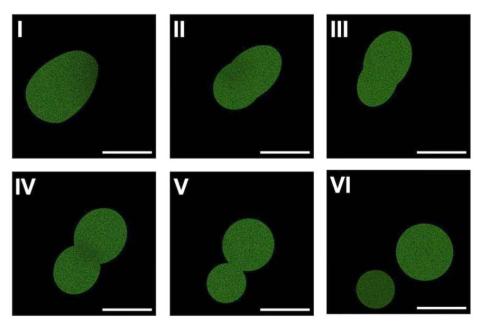
The team led by scientist Kate Adamala of the University of Minnesota has released the news—under an embargo—to several media outlets regarding the creation of a synthetic cell capable of feeding, growing, and replicating, which they have named Spudcell. Their work, which, according to Science News, was rejected by the journal Cell, is published on the team’s website, pending peer review.
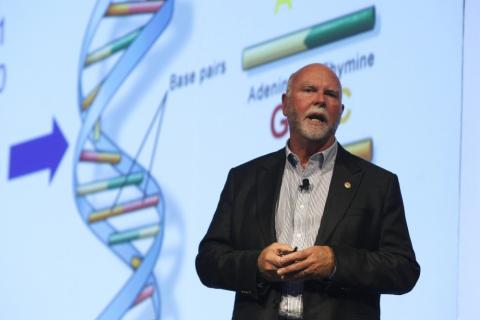
Craig Venter, the American biologist and entrepreneur who founded Celera Genomics to launch his own Human Genome Project in 1999 outside the public consortium, died Wednesday in San Diego at the age of 79, according to a statement from the J. Craig Venter Institute, which he led. Among other achievements, Venter completed the first full sequencing of a living organism’s genetic material and announced that he had succeeded in creating synthetic life.

A team in China has studied the ability of a test to detect the human papillomavirus (HPV)—responsible for the vast majority of cervical cancers—in menstrual blood from more than 3,000 women. The results indicate that the test is comparable to current screening performed in medical offices. According to the researchers, “Using menstrual blood for HPV testing is practical and non-invasive, allowing women to collect samples at home and thus potentially offering a practical way to expand access to screening.” The study is published in The BMJ.
[Nature Medicine has retracted this article on 24 June 2026]
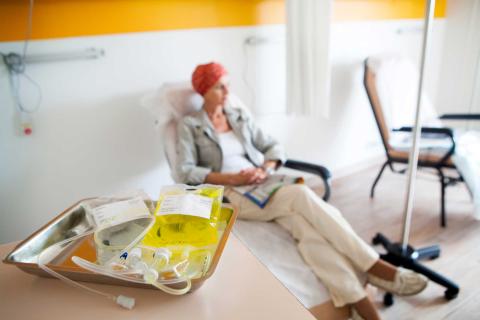
A phase 3 clinical trial conducted in China tested 210 patients with advanced non-small cell lung cancer—the most common type—to see whether the time of day when immunotherapy and chemotherapy were administered influenced their effectiveness. The data indicate that, on average, those who received therapy after 3 p.m. did not see their cancer worsen for 5.4 months. In contrast, those who received it before that time did not see their cancer worsen for an average of 11.7 months, almost twice as long. Overall, response rates were 56.2% and 69.5%, respectively. The results, published in Nature Medicine, suggest that scheduling therapy early in the day may offer a simple and cost-free way to improve treatment efficacy.

The use of hormonal contraceptives is associated with a small increase in the risk of breast cancer—one additional case of cancer for every 7,752 women who use these drugs—according to a Swedish study. The risk varies depending on the type of hormones administered, and is slightly higher with the use of contraceptives containing desogestrel. The study, published in JAMA Oncology, analyses data from a national registry between 2006 and 2019, with more than two million women aged between 13 and 49.

Although most cancer cases are considered sporadic, some are defined as hereditary, as certain individuals carry variants in their DNA that increase their risk. A team in the United States has analysed the genetic information of more than 400,000 people and concluded that the proportion of those with known risk variants is slightly higher than 5%. This figure is higher than expected: nearly double for variants of the BRCA1 or BRCA2 genes and between 10 and 20 times higher for variants related to thyroid cancer. The results are published in the journal JAMA in research letter format.

For women diagnosed with early-stage breast cancer, the long-term risk of developing a second primary cancer is low, around 2–3 per cent higher than that of women in the general population. This is one of the conclusions of a study published by The BMJ, which analysed data from nearly half a million women diagnosed in England between 1993 and 2016 with early-stage invasive breast cancer who underwent surgery. During a follow-up period of up to 20 years, around 65,000 women developed a second primary cancer, but the absolute excess risk compared to the risks in the general population was small.

Research involving more than 200 patients with depression, whose symptoms had not improved after NHS talk therapy shows that those who took part in eight group sessions of mindfulness-based cognitive therapy saw their depressive symptoms reduced, compared with those who received treatment as usual. The study is published in The Lancet Psychiatry.