Alfonso Valencia

Alfonso Valencia

Alfonso Valencia
Position

ICREA professor and director of Life Sciences at the Barcelona National Supercomputing Centre (BSC).

A UN report details the increasingly serious consequences of AI as it relates to water, land, and carbon emissions

A new United Nations (UN) report assesses the annual environmental costs of artificial intelligence (AI). According to the report, by 2030, if data centers were a country, their electricity consumption would be on par with that of France. As for carbon dioxide emissions, these could reach 400 million tons of CO₂ equivalent, comparable to the total emissions of the United Kingdom. The 9.3 trillion liters of water they use would cover the drinking water needs of the planet’s 8.1 billion people for 1.6 years. The report notes that the generation of high-resolution videos is at the top of AI’s energy consumption. Furthermore, it highlights the growing digital divide and environmental injustice between the nations that control AI systems and those that bear their environmental costs, particularly in the Global South.


0

A research team with Spanish participation creates an AI model for the diagnosis of rare diseases

A team from the Center for Genomic Regulation in Barcelona and Harvard Medical School (United States) has created an artificial intelligence (AI) model to support the diagnosis of rare diseases in patients with unique genetic mutations. Called popEVE, the tool performs better than AlphaMissense—another model developed by Google DeepMind—according to an article published in Nature Genetics.

0

Efforts are being made to increase biosecurity in light of the possibility of manufacturing dangerous proteins with AI

Artificial intelligence (AI)-assisted protein engineering is enabling advances in the design of new molecules, but it also poses biosafety challenges related to the potential production of harmful or dangerous proteins. Some of these threats, whether deliberate or accidental, may not be detected by current control tools. An international team has analyzed the situation and developed software patches to improve their identification, although they acknowledge that it remains incomplete. The authors of the study, published in the journal Science, warn that some of the data and code should not be published in a public repository due to its potential misuse.


0

Spanish project develops an AI to predict protein aggregation

A team led by the Centre for Genomic Regulation (CRG) in Barcelona and the Institute for Bioengineering of Catalonia (IBEC) has developed and used a new artificial intelligence (AI) tool called CANYA, together with a large volume of data, to predict when and why protein aggregation takes place. The resource could be used to advance research into neurodegenerative diseases and drug production, according to the joint press release. The results are published in the journal Science Advances.

0

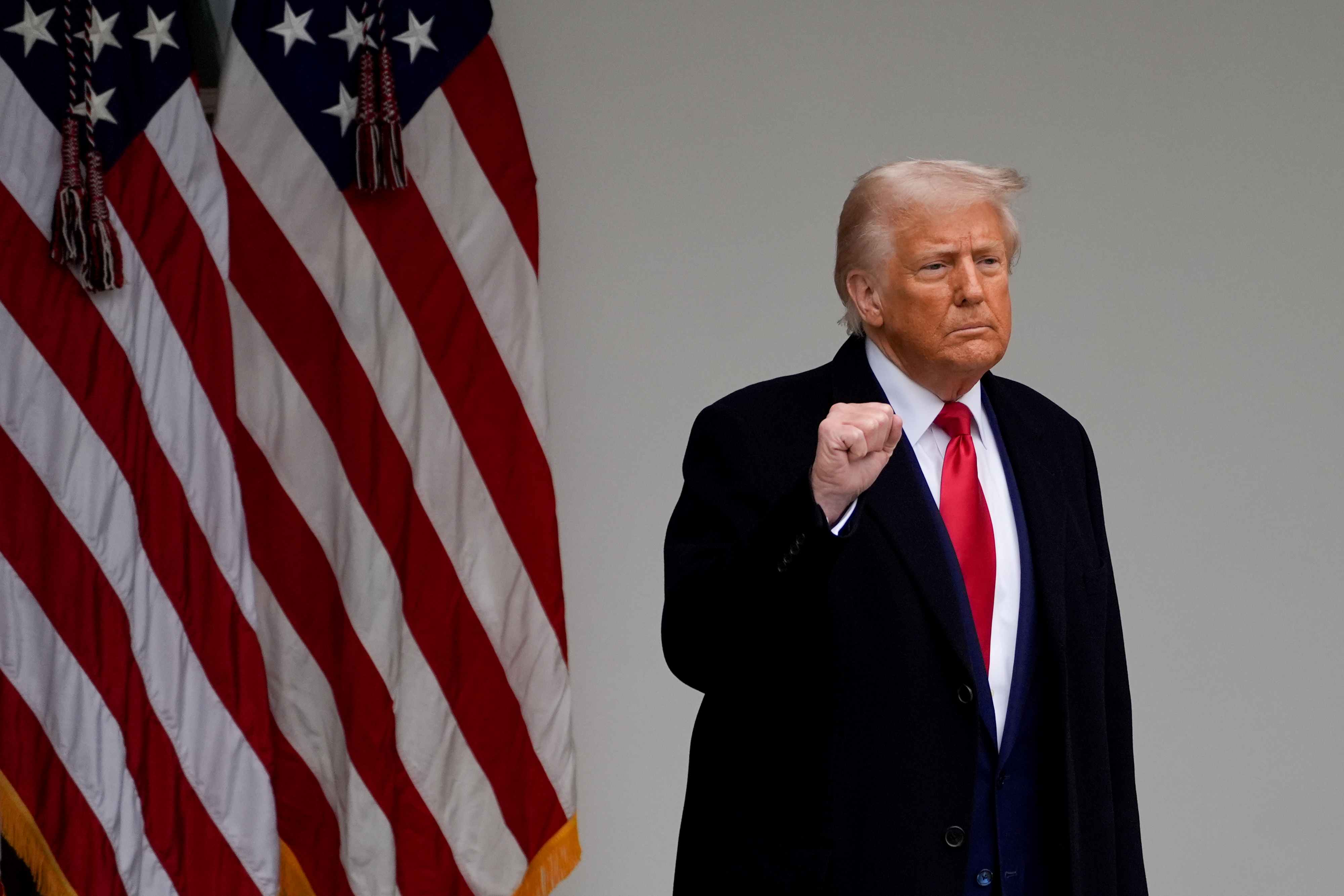
How Donald Trump's announced tariffs will affect the EU's science and health industry

US President Donald Trump has announced that all goods imported into the United States will be subject to a 10 % tariff. In the case of goods from the European Union, this will increase to 20 %, according to the executive order signed by Trump, which will affect the EU's science and health industry. This tariff will be even higher with other trading partners. The measure will not affect pharmaceuticals for the time being.


0

The resilience of global science in the face of political pressures

The budget cuts affecting scientific activity in countries such as the United States and the fragility of centralised systems make decentralised and collaborative models a necessity. Science, intrinsically global, requires structures that can withstand local pressures. In this situation, Europe has the opportunity - and the duty - to lead a new paradigm where data is free, secure and accessible.

1

More than thirty scientists warn in Science about the dangers of synthesizing 'mirror bacteria'

Thirty eight scientists from different specialties, including Craig Venter, a pioneer in the creation of artificial synthetic life, have written an article in the journal Science in which they assess the possibilities of synthesizing mirror organisms, but also warn of the risks they pose. This type of microorganisms, which would present a mirror structure to that currently found in nature, would have potential applications due to their resistance to biological degradation. However, they would also pose a danger because they would not be recognized by our defenses and could spread in ecosystems. Scientists call for more research and a broad debate, and warn that until more is known, this type of organism should not be created. 


0

Open or Closed Artificial Intelligence: How Science Suffers When Technology is in the Hands of Big Companies

Two of the Nobel Prize winners in Chemistry 2024 are employees of Google DeepMind, who caused significant unrest among their colleagues in May. Hassabis and Jumper announced in *Nature* the results of their AlphaFold 3 model, with applications in drug design; however, they published it in a closed manner, with reviewers not even having access to the system, which contradicts the basic principles of scientific publication. We risk having the transformative potential of AI controlled by big tech companies.

1

Nobel Prize in Chemistry for Baker, Hassabis and Jumper for computational protein design and structure prediction

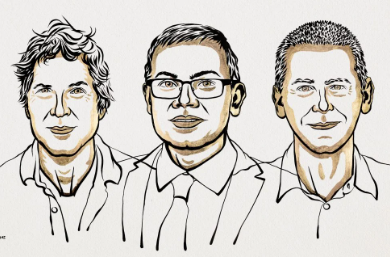
The Royal Swedish Academy of Sciences has awarded the Nobel Prize in Chemistry 2024 on the one hand to David Baker for computational protein design, which makes it possible to construct proteins with functions not present in nature. On the other hand, jointly to Demis Hassabis and John M. Jumper of Google DeepMind, for the development of AlphaFold2, which allows the structure of the 200 million known proteins to be predicted at high speed. 

0

Reactions: EU institutions agree on artificial intelligence law

After lengthy negotiations, the European Commission, the European Parliament and the Council of the EU - which represents the member states - reached a provisional agreement last night on the content of the 'AI Act', the future law that will regulate the development of artificial intelligence in Europe, the first in the world. The agreement limits the use of biometric identification systems by security forces, includes rules for generative AI models such as ChatGPT and provides for fines of up to 35 million euros for those who violate the rules, among other measures. The text must now be formally adopted by the Parliament and Council before it becomes EU law.


0