In recent days, classes have begun in schools and colleges throughout Spain. In summer, the unprecedented heat caused by climate change forces these centres to adapt to high temperatures. However, once the heat waves have passed, young people face another problem closely related to the previous one: pollution.
‘The impact of heatwaves and cold spells on hospital admissions is an order of magnitude lower than that of pollution,’ explained Julio Díaz, research professor at the Carlos III Health Institute, during a briefing organised by SMC Spain. "Heatwaves only occur on a few days, but we are exposed to pollution all year round. If we want to reduce admissions, we have to focus on that,‘ added Díaz, who, along with Cristina Linares, is scientific coordinator of the Health and Climate Change Observatory and co-director of the Climate Change, Health and Urban Environment Unit at the National School of Health.
’Air pollution is a major public health problem. Every day, a person breathes an average of 11,000 litres of air that they cannot choose,‘ said Cristina Linares, a research scientist at the Carlos III Health Institute, during the session. ’It is up to the government to enforce these good air quality standards, because there are groups that are particularly susceptible to air pollution," Linares pointed out.
In this regard, the European Parliament passed a new law in 2024 to reduce the air pollution to which its citizens are exposed. The new rules set stricter limits for 2030 for those pollutants with the greatest impact on human health. If these limits are exceeded, those affected will be able to take legal action and even receive financial compensation.
What are we talking about when we talk about pollution?
We are referring to the presence in the air of substances that can be harmful to health. These come mainly from traffic, but also from the burning of fuels for other purposes, such as industry and heating.
In Spain, the main atmospheric pollutants harmful to the health of the population in an urban environment are nitrogen dioxide (NO2), tropospheric ozone (O3) and particulate matter smaller than 2.5 microns (PM2.5) and smaller than 10 microns (PM10).
What effect does it have on the health of young people?
‘Air pollution particularly affects children,’ researchers at the Carlos III Health Institute explain to SMC. This is not only due to the worsening of respiratory diseases but also, according to Díaz and Linares, ‘to a direct irritative effect of pollutants on the respiratory tract, as well as greater exposure,’ given that children spend more time outdoors, not to mention that their immune systems are still developing. In addition, these substances ‘alter physiological functions’ related to cognition, behaviour, the endocrine system and detoxification mechanisms.
‘It is crucial to note that exposure to pollution during childhood can influence the development of respiratory diseases in adulthood,’ they point out, highlighting the significant role of NO2. In this regard, the most critical stages are the foetal stage and early childhood.
‘The paediatric population, especially during the first decade of life, inhales, ingests and absorbs more environmental toxic substances per kilogram of weight than an adult,’ say Díaz and Linares. ‘If we add to this their lower capacity to neutralise, detoxify and eliminate external pollutants, we see that the adverse effects will be more intense and persistent.’
‘Sometimes prevention plans and the media focus on the impact of certain environmental risks’ such as heat waves, Díaz and Linares lament, “ignoring” that, during these periods, factors such as atmospheric pollutants ‘act synergistically, intensifying their impact on health.’ This, they say, ‘is more harmful than the impact caused by the excess temperature itself.’
Does this have anything to do with climate change?
Climate change poses a challenge to education in itself. A report published by UNESCO in 2024 warned that children were losing up to a year and a half of schooling due to extreme heat, and that heatwaves were also affecting exam results.
However, extreme temperatures have other indirect effects. One of these is that they worsen air quality.
‘Air pollution and climate change are deeply interrelated, as the chemicals that cause air quality degradation are often emitted alongside greenhouse gases,’ recalled an article published in The Lancet Planetary Health in 2023. ‘In addition to the separate risks to the population associated with air pollution and climate change, each can exacerbate the effects of the other.’
For example, the researchers explained that drier and warmer conditions ‘can lead to high levels of air pollution in general, especially ozone.’ They also noted that future more intense heat waves ‘will cause more forest fires, which will increase emissions of harmful greenhouse gases and particulate matter.’
Díaz and Linares highlight the burning of fossil fuels, but also the increase in the extent of desert areas, the spread of pollutants by the Azores anticyclone and the greater intensity and frequency of forest fires as factors related to climate change that worsen the air we breathe.
Do Spanish schools meet the highest standards?
The available data indicates that most Spanish schools exceed the pollution levels recommended by the WHO.
For example, a report carried out by Ecologistas en Acción and published in 2025 showed that 99% of the centres analysed failed to comply with these limits: of 174 school environments and sensitive areas analysed in 14 municipalities in six autonomous communities, only two did not exceed the stipulated 10 µg/m³ of NO₂.
According to the same report, 12 school environments (7%) exceeded 40 µg/m³, which is the legal limit currently in force in the European Union.
These are not isolated results. A previous study published in 2024, also by Ecologistas en Acción, concluded that 90% of the 114 centres measured were above the NO2 limit indicated in the revision of the Air Quality Directive, which is 20 μg/m³. None of them managed to comply with the WHO recommendations of 10 μg/m³
Nor is this a problem exclusive to Spain. For example, a report published in 2022 showed that 35 of 36 British schools monitored (97%) had PM2.5 levels above the recommended level, while nitrogen dioxide was exceeded in 65% of the centres.
In reality, all these data are only a reflection of the situation in cities in general. A report by the Swiss company IQAir carried out in almost 9,000 cities in 138 countries concluded that only seven complied with WHO recommendations. In Spain, some areas exceeded these standards by two to three times: Madrid, Valencia, Murcia, Seville, Cordoba and some areas of Galicia and Asturias were among the most unhealthy.
What can be done?
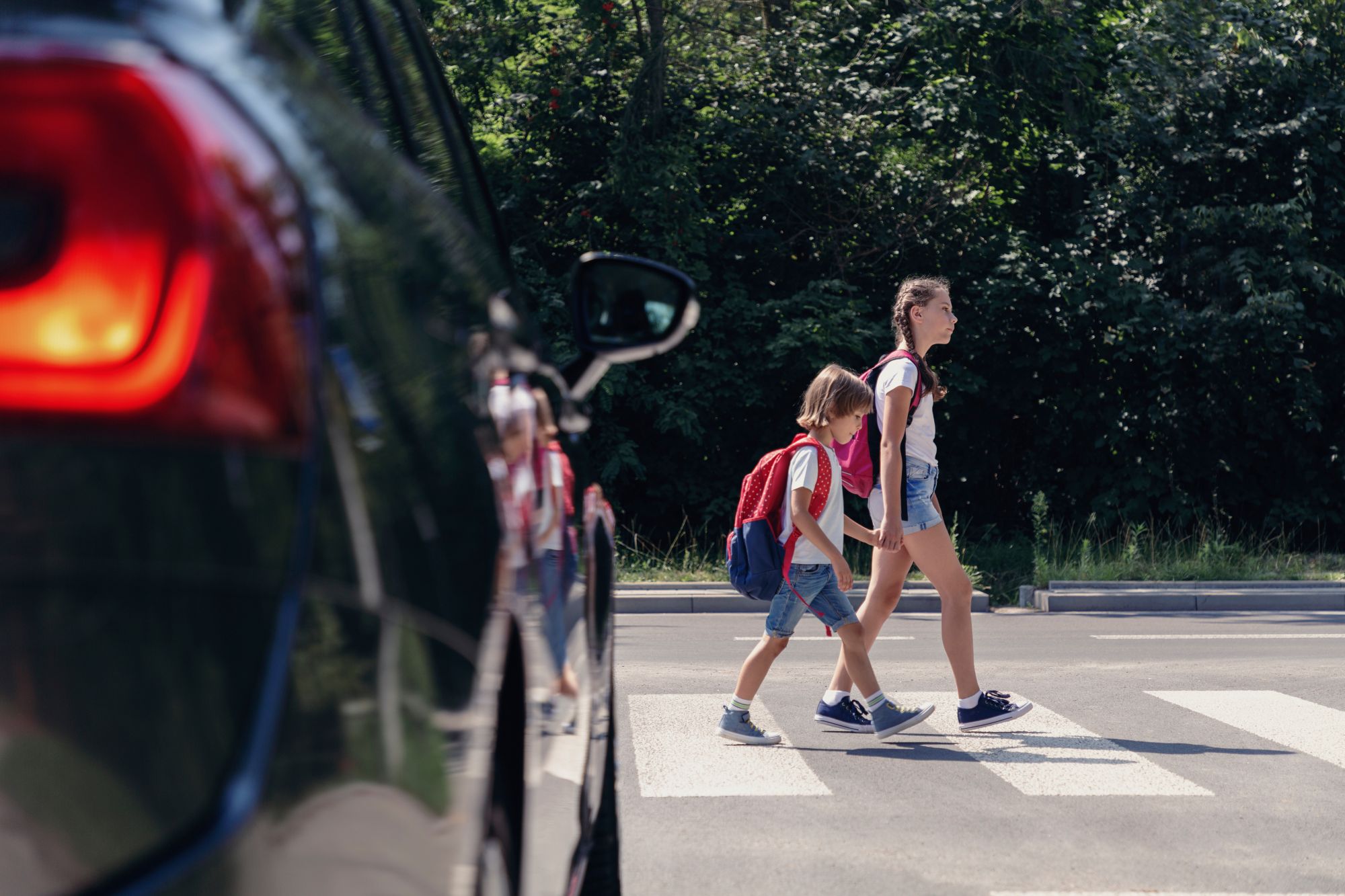
Given that traffic is the main cause of pollution affecting students, reducing it in areas near schools is one of the measures recommended by experts.
For example, the Catalan Paediatric Society calls for, in its Decalogue for safe and healthy school environments, ‘calming traffic in school environments, prioritising pedestrianisation and restricting motorised traffic’. They also suggest ‘replacing car parks on adjacent streets with parking spaces for bicycles and scooters and waiting, meeting and play areas with trees, vegetation and water’. They also recommend that school bus routes be electric.
Other studies have suggested that green screens—for example, ivy—air purifiers, ventilation, and adequate occupancy levels can also reduce pollutant particles in schools.
‘A plausible alternative would be to adjust current pollution limits to the WHO's air quality guidelines, for which the implementation of low-emission zones limiting traffic within cities would be a very useful tool,’ add Díaz and Linares.
Furthermore, as climate change increases pollutant levels, any other measures aimed at mitigating rising temperatures would also prevent an increase in pollution.
Does pollution have other effects?
Several studies have found associations between pollution and problems with performance and mental health in children. For example, with depression and anxiety. Or with lower attention span. Or with lower cognitive abilities.
The problem is that these are observational studies, often with small effects, and in which causality cannot be concluded. In other words, we cannot know whether the results are due to pollution itself or to other confounding factors that are difficult to control.
Two researchers warned of this in a recent article: ‘These studies often poorly control for confounding factors such as age, sex, sleep, nutrition, noise and teacher quality, or they attempt to take all factors into account in models based on small samples with low statistical power, so the probability of detecting a real effect when it actually exists is also low.’
They therefore pointed out that sometimes ‘the results are inevitably noisy’ and that, ‘in some cases, the observed effect of indoor air quality on performance is less than the natural variability of the test scores themselves.’
There are also studies that have found associations between the pollution to which students are exposed and other health problems. For example, a study conducted with more than 46,000 Catalan children and adolescents found that moving to more polluted areas was associated with an increase in their Body Mass Index (BMI).
Are there other types of pollution that affect children?
In addition, there are other types of pollution with negative effects, also associated with traffic. The role of noise in school environments has also been studied. A study carried out by the Barcelona Institute for Global Health (ISGlobal) with 2,680 children aged between 7 and 10 from 38 schools in Barcelona concluded that noise reduced attention and memory.
‘The effect that traffic noise has on children's health has the same origin as chemical air pollution, traffic, and its effects are similar,’ say Díaz and Linares. However, this ‘is not considered in practically any type of action’.
In this regard, the Decalogue of the Catalan Paediatric Society also calls for a reduction in noise pollution and the installation of sensors in classrooms, not only for air quality but also for noise.
Is school the only thing that matters?
Although it may seem otherwise, children spend most of their day outside of school. Therefore, the conditions they encounter at home and on their way to school are also important.
For example, a study conducted with more than 1,200 children in Barcelona revealed that exposure to PM2.5 on their way to school was associated with poorer working memory (temporary storage and processing of information). The authors therefore recommended the implementation of policies aimed at cleaning the air along these routes.
‘The issue of pollution is particularly relevant in the atmosphere of large cities,’ say Díaz and Linares. That is why they believe that ‘in large urban centres, protection levels should be higher, especially around certain areas such as schools and residences’ because the population concentrated there ‘is significantly exposed for several hours a day and is more vulnerable’.