Why is there an increased risk of mosquito-borne disease transmission this year?
The European Centre for Disease Prevention and Control (ECDC) explained in a recent webinar on 6 August 2025 that the affected areas have "tripled within the last 15 years,” in the words of Tamás Bakonyi, principal expert of vector-borne diseases at the ECDC.
“Climate change and intense heat waves don’t help, as they accelerate the life cycle of these [mosquito] vectors,” Jacob Lorenzo-Morales, director of the University Institute of Tropical Diseases and Public Health of the Canary Islands, tells the SMC Spain.
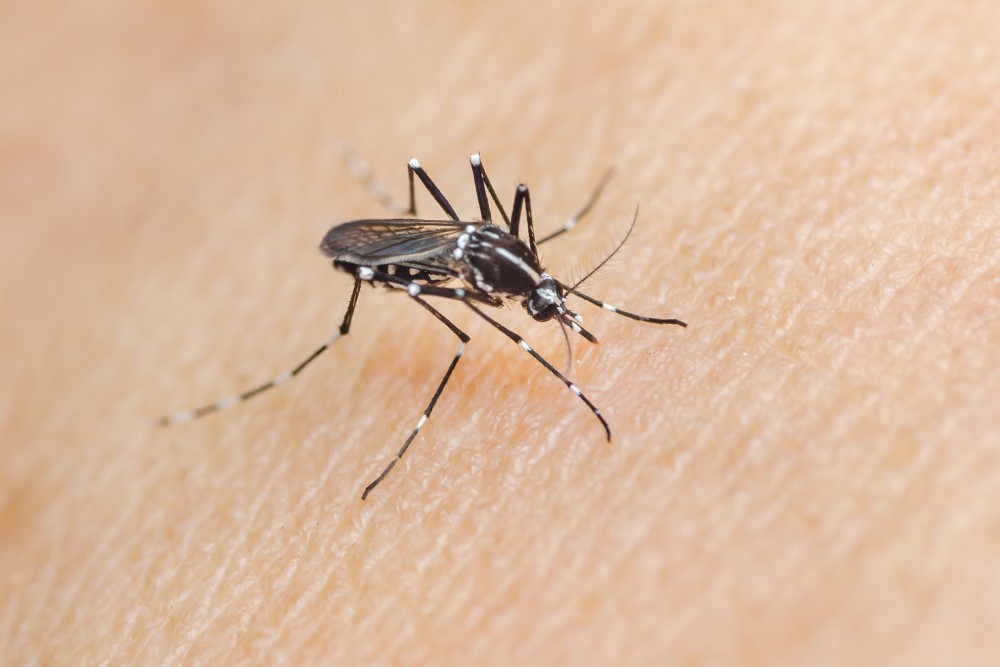
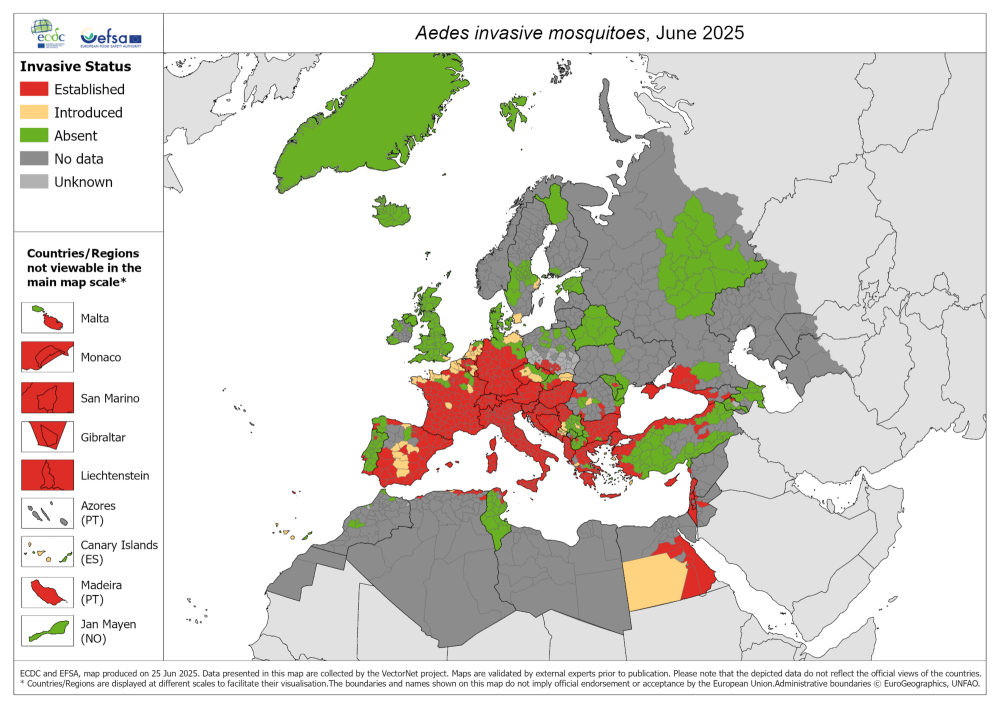
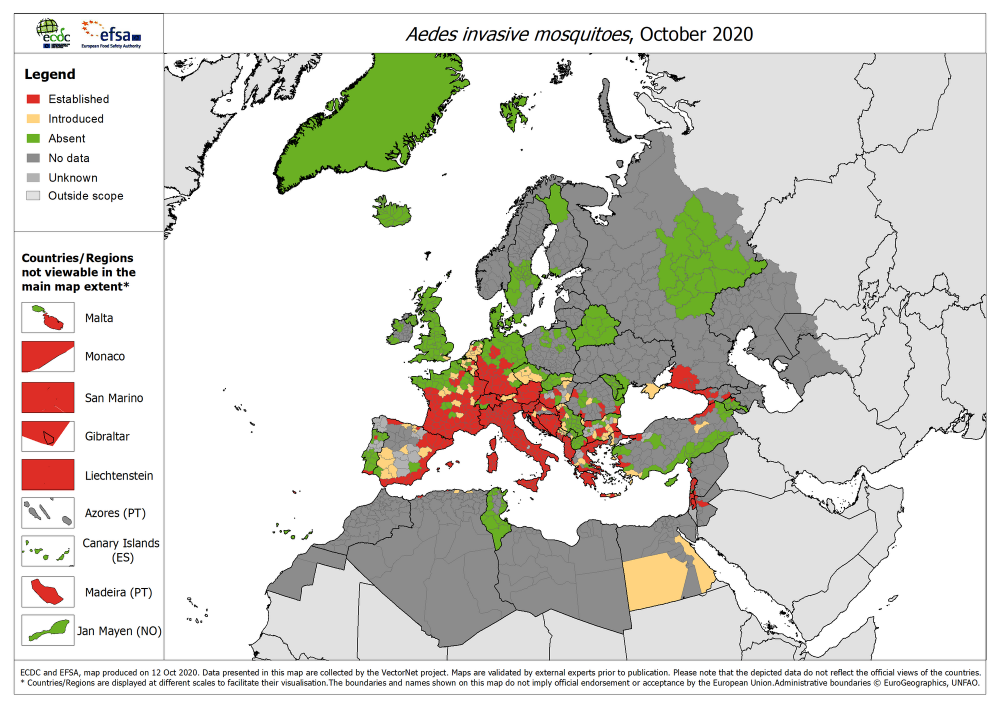
For now, Aedes aegypti is established in Cyprus and Madeira (Portugal), but Aedes albopictus keeps expanding in mainland Europe - Spain included. We can visualise this expansion in the following maps of the distribution of invasive mosquitoes, published monthly by the ECDC since 2020.
What's happening with chikungunya en 2025?
Chikungunya is a mosquito-borne viral disease. Its symptoms include fever, muscle and joint pain, and itching. Most infected people recover, but a third of those infected may develop chronic arthritis.
After two major episodes in 2007 and 2017, the virus has made headlines again this year. In China, more than 7,000 cases were reported in Guangdong province this year, with almost 3,000 new infections in the last week, according to Euronews. An outbreak started last year on Reunion Island (a French territory in the Indian Ocean), which intensified from January 2025. Between 1 January and 30 July, France reported 49 autochthonous cases, mainly in the south of the country (between May and July), and Italy 2 (in June).
Lorenzo Morales points out that, although there were no local transmission cases in Spain this year, there were imported cases and an autochthonous case of chikungunya near the French-Spanish border, reported in July in Hendaye (France). "Given the proximity of Hendaye to municipalities such as Irun, Hondarribia, Donostia, Lezo, Pasaia, Oiartzun or Errenteria, the usual cross-border mobility of the population, and the celebration of summer festivals and events now in this area, the Department of Health has informed the town councils [in the Bidasoa area], which are responsible for this matter, so that they reinforce preventive measures, although the situation should not cause alarm", said the Basque Government's Department of Health in a press release published on 31 July.
What's happening with dengue in 2025?
Dengue is also a mosquito-borne viral disease, characterised by symptoms such as fever, headache, muscle and joint pain, and itching. In limited cases, dengue can be severe and even fatal. There is a significant risk of ‘importation’ of cases, with a ‘high intensity’ of dengue in Central and South America, Bakonyi warned in the webinar.
This year, after some dengue cases were detected in Madeira in late January, France reported six cases in five different départements (provinces) in June and July, and Italy reported three cases in the same area last month. Now, ‘all these clusters are considered active, which means there is still a possibility of mosquito-borne [disease] transmission’ in these areas, Bakonyi said.
In 2024, Spain reported eight cases in the province of Tarragona, but local transmission cases had already skyrocketed in other Mediterranean countries. In total, France reported 83 cases in 2024, up from 45 the previous year. In Italy, the number of cases rose from 82 in 2023 to 213 cases in 2024.
What can be done to limit the spread of these and other diseases?
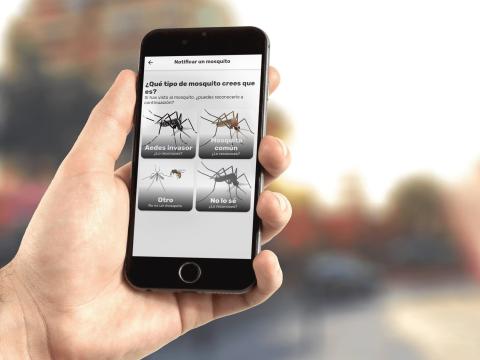
At an individual level, we can take measures to limit the proliferation of mosquitoes, avoid mosquito bites and protect ourselves when we travel to areas where these diseases are endemic. We recommend reading our guide How to distinguish dangerous species of mosquitoes and what to do if you get bitten by one.
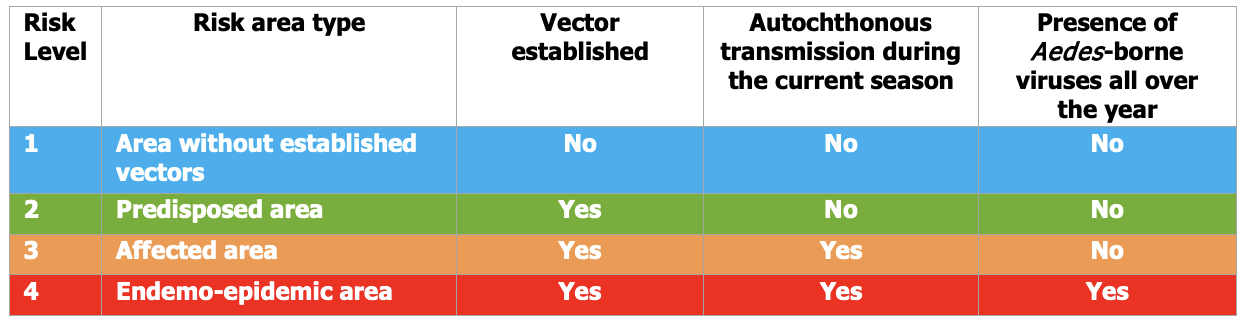
Administrations must take their own measures, too. On 1 July, the ECDC published a public health guidance document that defines four levels of risk. For each level of risk, the guide details necessary measures for evaluation, surveillance, prevention, preparedness, response and control (including laboratory preparedness, coordination between various sectors and vector management), whether at national, regional or local level.
For example, in its press release last week, the Basque Government's Department of Health mentions three recommendations to local councils:
-
Inform the public: share messages to prevent mosquito bites, especially among the elderly, children and pregnant women, and promote the use of repellents, long-sleeved clothing, mosquito nets or electric anti-mosquito devices.
-
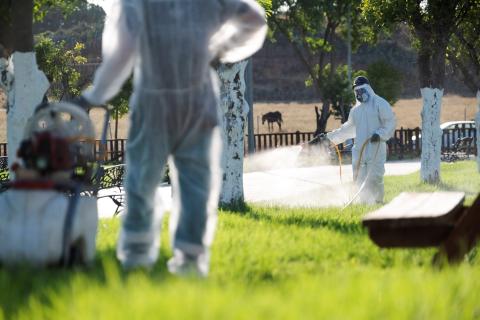
Control and eliminate breeding sites: inspect areas likely to accumulate stagnant water in courtyards, gardens, ornamental fountains, and consider ‘fumigation measures in environments detected as high risk’.
-
Encourage collaboration between municipalities ‘to optimise resources for mosquito vector surveillance and control’ and with government public health services ‘to report any suspected cases’.
‘We need to maintain active and passive surveillance for the control of invasive vectors and the pathogens they transmit,’ Lorenzo Morales tells the SMC Spain. ‘We will see how the summer season progresses with West Nile virus, among others.’