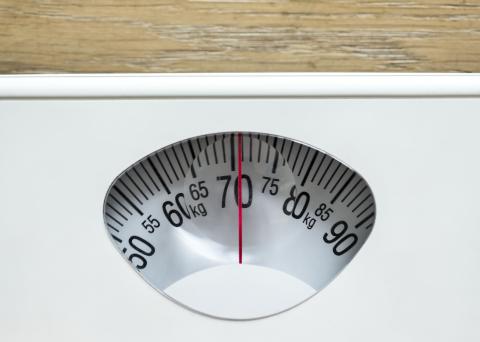
Focusing solely on weight loss to treat obesity may be more harmful than beneficial
An analysis published in the medical journal The BMJ points out that lifestyle changes recommended by doctors to people with obesity, focusing on calorie restriction and increased physical activity, have little effect on long-term weight loss, fail to significantly reduce cardiovascular risks and, yet, can lead to discrimination, stigmatisation and eating disorders. The authors also point out that weight alone is an inadequate measure of a person's health, as reflected in recent clinical guidelines, and propose a ‘health for all sizes’ approach with effective, patient-centred care.

Luis Cereijo - Obesidad BMJ peso
Luis Cereijo
Assistant professor of Physical and Sports Education and researcher in Epidemiology and Public Health at the University of Alcalá
The article questions the effectiveness of interventions focused on weight loss and highlights the risks inherent in this approach. Although it is not an ‘original study’ that provides new empirical data, it does integrate and synthesise a sample of high-quality literature, using it to support its conclusions. It is rigorous and evidence-based, supported by a significant sample of meta-analyses and randomised clinical trials. Its main limitation lies in its overly narrow focus on middle- and high-income countries, neglecting the impact in countries outside the Western world.
This analysis adds to a growing body of scientific literature that critically evaluates interventions based exclusively on body mass index (BMI). It is important to note that the authors do not deny the effectiveness of physical activity or a proper diet on people's health. The approach they advocate is that programmes based on promoting lifestyle habits focused on weight loss have not proven to be effective. Furthermore, it is also in line with previous research linking weight stigma to adverse effects on mental and physical health.
This article is a spur to a need that part of the scientific world has been calling for: a change in the focus of the approach to people's health. The obesocentric approach has proven not only ineffective but also a significant problem for mental and physical health. This and other increasingly common evidence calls for the promotion of a person-centred model that prioritises the overall health of the patient and not just their weight. The importance of de-medicalising lifestyle habits and avoiding reducing them to mere therapeutic tools against overweight is highlighted. There is an urgent need to develop new clinical guidelines that allow these pathologies to be addressed by considering the patient beyond their weight, understanding their social reality, their material living conditions and the environment in which they live. The fact that maintaining a focus on lifestyle has proven ineffective is reason enough for change. But this change becomes even more urgent when we understand that the populations most affected by this stigma are also those with the highest prevalence of the conditions we are trying to address, and therefore those who most need an effective approach.
Julia Díez - obesidad BMJ peso
Julia Díez Escudero
Assistant Professor, PhD, Public Health and Epidemiology Research Group, University of Alcalá
Obesity is not a choice or the result of a lack of willpower. In this sense, the article emphasises the idea of moving away from addressing this problem through individual strategies such as weight loss interventions. Evidence supports the view that, at the individual level, these types of interventions generate guilt and damage physical (e.g. eating disorders) and mental (e.g. anxiety or depression) health.
At the population level, they promote social stigma. And, as the review also points out, they have not even been shown to be effective or sustainable strategies—either in the medium or long term—for reducing the burden of disease or the social or economic costs associated with obesity.
Beyond individual behaviours, the important thing would be to focus on the collective. In other words, think about living conditions (how much does it cost to eat healthily? How much time is available for cooking? What kind of menus are offered in schools, hospitals, or nursing homes?). Obesity, like most health problems, follows a clear social gradient: those who are most vulnerable are the most affected. In fact, the WHO has estimated that, in Europe, inequalities in educational attainment may account for up to 26% of obesity in men and up to 50% in women.
Andreea Ciudin - obesidad BMJ peso
Andreea Ciudin
Endocrinologist and coordinator of the Obesity Unit at Vall d'Hebron Hospital.
Obesity is a group of chronic neuroendocrine diseases characterised by alterations in appetite regulation and metabolism, resulting in excess and dysfunction of adipose tissue that negatively impacts health. This definition alone shows that it is not a matter of willpower or weight. Although excess fat is more visible in larger bodies with many extra pounds, there are also body mass indexes (BMI) of 25 with excess fat that are considered obese, not overweight. We need to shift the focus from weight to body composition and its impact on health.
Example 1: bodybuilder, 120 kg, BMI 35, 80% muscle: NOT obese, does not need to lose weight.
Example 2: person weighing 80 kg, BMI 25, 40% fat: obese, but needs to lose fat, not weight, as weight can also include muscle and bone, without distinction.
Keeping the focus on losing weight causes and perpetuates the craze for miracle strategies, body image and aesthetics, and the inappropriate use of treatments that are hormone-based drugs, with clear mechanisms and indications, which have recently been trivialised for this reason and are being misused.
It can even be dangerous if the goal is to lose weight at all costs, seeking different methods without considering that significant muscle mass can be lost. And this is harmful rather than beneficial.
This encourages frustration and stigma, because comparisons are made between people in the same household, neighbours, friends... Weight loss is measured, when treatment goals should be individualised in each case.
The goal should be to improve health. If there are no complications due to obesity, the goal is to reduce fat and prevent non-fat organ dysfunction. If there are complications, the goal is to reverse the dysfunction in these organs. And it is not always necessary to lose a certain number of kilos to do this.
Example: a person who loses 10 kg of fat and gains 8 kg of muscle. If you look at the fact that they have lost 2 kg, it is a disaster, but in reality it is a huge success, because they have lost the fat that was making them ill and gained muscle that is making them healthy.
Mercedes Martínez Cortés - obesidad BMJ peso
Mercedes Martínez Cortés
Specialist in public health, technical advisor at the Subdirectorate General for Health Prevention and Promotion, Madrid Salud
In fact, we agree with the general content of the article, insofar as it identifies the low effectiveness of many of the interventions we are implementing to combat the obesity epidemic and the possible adverse effects of the way in which we are implementing these interventions.
However, we cannot forget that overweight and obesity already affect half of the population in developed countries and that no one questions the link between excess weight and reduced quality of life, as well as higher morbidity and mortality from chronic diseases (cancer, diabetes mellitus, cardiovascular disease, depression, sleep apnoea, osteoarticular disease, etc.).
Therefore, the emphasis must be placed on finding more effective forms of intervention that take into account the importance of not reinforcing the social stigma associated with obesity.
The problems with obesity interventions highlighted in the article are, in our view, the result of taking a simple, individual approach to a complex problem with a clear social origin.
We have an obesogenic lifestyle, and when we ask patients to lead a healthy life, we are asking them to make such a huge effort that many of them are unable to do so, which leads to feelings of helplessness and guilt. That is why interventions cannot be limited to individual clinical advice, but must include group and community-based interventions.
Franco et al.
- Research article
- Peer reviewed