What is creatine and what is it used for?
‘It is a natural compound that the body produces from three amino acids: arginine, glycine and methionine, and which is also obtained from the diet, mainly through red meat, fish and chicken,’ explains Helios Pareja, PhD in Physiology and coordinator of the Exercise Physiology and Nutrition research group at the Autonomous University of Madrid (UAM), to SMC Spain.
It has become popular as a supplement because ‘it can be useful for many people, depending on their goals and needs,’ says Pareja. The supplement ‘is mainly stored in the muscles and plays a key role in the production of rapid energy during high-intensity, short-duration activities,’ adds Víctor Cuadrado, PhD in Physical Activity and Sports Sciences and member of the same research group.
It is mainly stored in the muscles and plays a key role in the production of rapid energy during high-intensity, short-duration activities
Víctor Cuadrado
How has consumption evolved in recent decades?
In the 1970s, the benefits of creatine as a supplement began to be discovered, and in the 1990s, athletes began to introduce it into their diets until it became popular today, as highlighted in an article by WebMD.
According to data collected by the website Statista, the global creatine market was worth more than $300 million in 2024 and is expected to exceed $600 million by 2030.
What effects does it have?
Creatine improves athletic performance, promotes muscle mass gain when combined with strength training, and may help prevent muscle cramps or injuries.
‘Its main function is to increase phosphocreatine stores in the muscles,’ explains Cuadrado. This allows for faster regeneration of ATP—the immediate source of chemical energy for muscle contraction—and improves the ability to perform explosive efforts.
In athletes, this translates into ‘increased strength, power and better muscle recovery,’ says Mónica Herrero, vice president of the Professional Association of Dietitians-Nutritionists of Aragon (CPDNA).
In non-athletes, creatine may improve cognition and memory—mainly in older adults—as indicated by a review published in the journal Sports Medicine, although more studies are needed to confirm these potential benefits.
¿Who can take it?
It is mainly sportspeople and athletes who engage in physical exercises such as weightlifting, speed or sprinting who consume this supplement in order to recover as quickly as possible during competitions or training.
‘It can be used in older people, where it has been shown to help preserve muscle mass and strength,’ says Pareja. This is according to a review published in the journal Nutrients, which highlights that creatine can help prevent sarcopenia, a disease that involves the progressive loss of muscle mass.
People who have low creatine levels, such as vegetarians and vegans, seem to benefit from these supplements ‘since creatine is found in animal-based foods,’ explains Pareja.
‘In people who are undergoing rehabilitation for injuries or periods of immobilisation, creatine can be a useful tool’ to speed up recovery, explains José María Moya, PhD in Physical Activity and Sports Sciences and researcher at the UAM.
Who should not take creatine?
Despite its benefits, Mónica Herrero warns: ‘Creatine is not for everyone.’ The specialist points out that its consumption is not recommended for people with kidney or liver disease without medical supervision or for minors without professional guidance.
‘It should also not be used by people with any condition that prevents them from engaging in physical activity at a competitive level,’ explains Antonio Luis Villarino Marín, professor of biochemistry at the Complutense University of Madrid and president of the Spanish Society of Dietetics and Food Sciences (SEDCA).
During pregnancy or breastfeeding, there is no evidence of safety when taking the supplement, so it is recommended to avoid its consumption during this period, as stated in an article published in MedlinePlus. Creatine is also not recommended if you are taking medications that alter blood sugar levels.
Creatine is not for everyone
Mónica Herrero
Is it suitable for consumption by the general population?
‘If you follow a balanced diet and exercise regularly, it wouldn't be necessary,’ explains Enrique Roche Collado, professor of nutrition at the Miguel Hernández University in Elche, to the SMC. Adriana Beatriz di Lorio, a nutritionist and doctor of public health at the same university, agrees, explaining that although creatine supplementation has been shown to be beneficial in some specific groups, ‘it cannot be definitively concluded that it is indicated for the general population.’
Along these lines, the authors of an article published in the Journal of the International Society of Sports Nutrition emphasise that ‘creatine alone is unlikely to produce substantial gains in muscle strength and functional performance’ if not accompanied by a resistance training programme.
Di Lorio stresses the importance of assessing each case individually: ‘It is important to evaluate factors such as overall health, diet and specific needs before recommending creatine consumption across the board.’
When and how should it be taken?
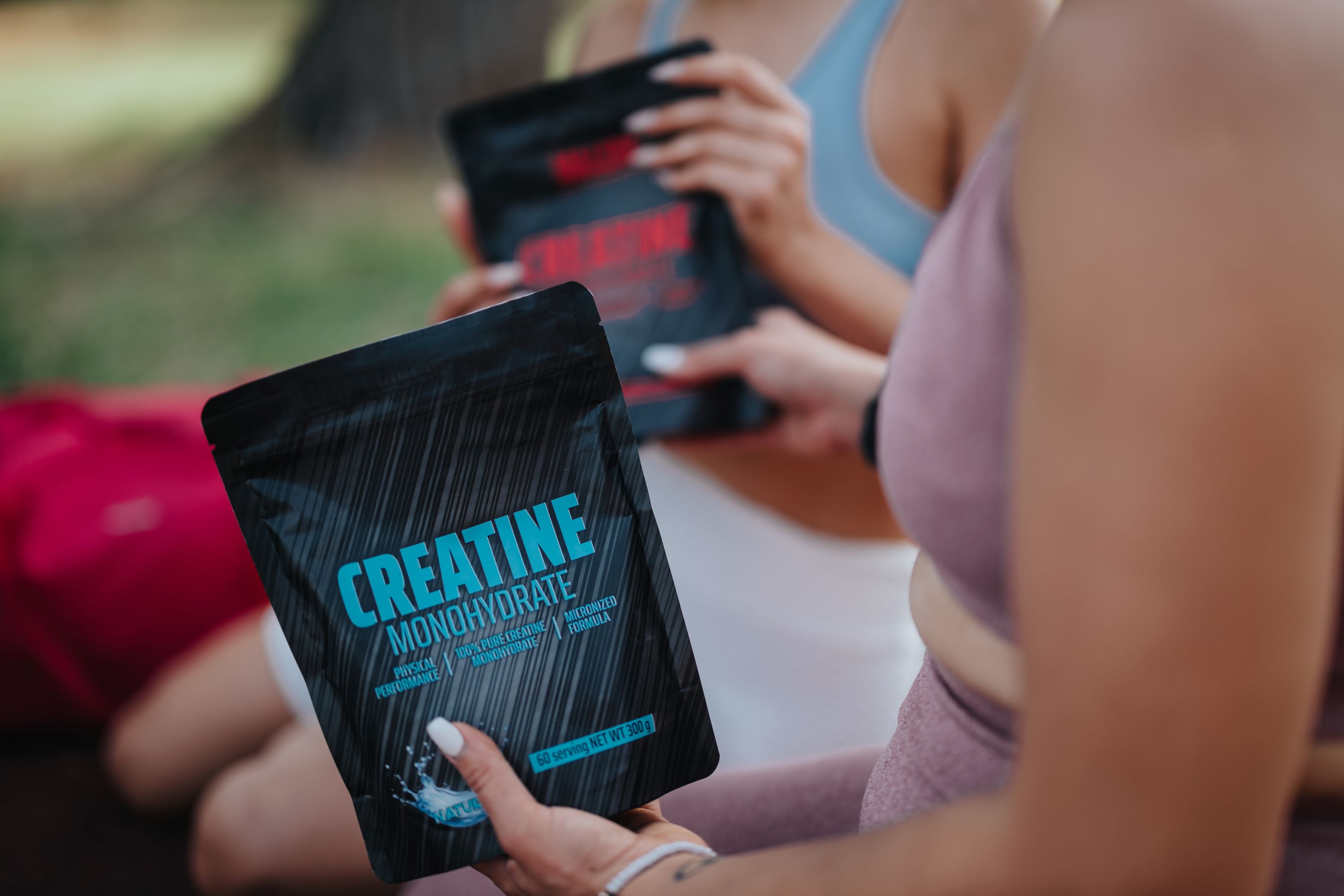
Creatine is sold in powder form that can be dissolved in water, juice or tea and should be consumed immediately after preparation. The recommended dose, which should be consulted with a specialist, will depend on the goal and supplementation strategy: with a constant daily dose or with a loading phase.
‘The dose most supported by science is 3 to 5 grams of creatine monohydrate per day,’ explains Herrero. With this option, muscle saturation occurs more gradually — around 3-4 weeks — but the benefits are the same in the long term.
The loading phase consists of consuming 20 grams of creatine per day for a period of 5 to 7 days, divided into four 5-gram doses. This is followed by a maintenance phase, in which 3 to 5 grams are taken daily. ‘This method allows the muscles to saturate faster and can accelerate performance benefits,’ explains Herrero.
It has not been proven that consuming a higher dose than that studied offers any advantage, and it could have risks.
It can be taken at any time of day, although some studies suggest that it may be more effective after exercise. Pareja points out that a meal containing carbohydrates and protein can promote its absorption.
As for the duration of supplementation, it is not necessary to take breaks in the process, as there is no evidence that prolonged use causes negative effects in healthy people.
Creatine can be a useful supplement for certain groups of people, but it is not essential or recommended for everyone. It is always best to consult a healthcare professional before adding it to your diet
Mónica Herrero
Are there different types of creatine?
Yes. ‘The most studied and recommended, due to its effectiveness and safety, is creatine monohydrate,’ Herrero emphasises. Other versions, such as creatine HCL or Kre-Alkalyn, ‘have not shown significant advantages in scientific studies,’ says the dietitian.
Within creatine monohydrate, there is a variant called micronised creatine, which has smaller particles. ‘This improves its solubility in liquids, although its effectiveness is the same,’ says Pareja.
Are there any risks associated with taking it?
Creatine is a safe nutritional supplement ‘in healthy people, when used in appropriate doses,’ Herrero clarifies, reminding us that those with kidney or liver disease should avoid creatine without medical supervision.
‘It can cause mild digestive discomfort, such as bloating or upset stomach if taken in high doses,’ Sara Higueras, Doctor of Physical Activity and Sports Sciences and member of the UAM research group, tells SMC Spain. Other side effects may include anxiety, shortness of breath, fatigue, fever, headache, nausea or vomiting. To avoid these, Higueras recommends spreading the dose throughout the day or trying more soluble versions.
Herrero sums it up: ‘Creatine can be a useful supplement for certain groups of people, but it is not essential or recommended for everyone. It is always best to consult a health professional before adding it to your diet.