Institute of Biomedicine of Valencia (IBV-CSIC)
If you are the contact person for this centre and you wish to make any changes, please contact us.
Coordinator of the CSIC Global Health Platform and researcher at the Instituto de Biomedicina de Valencia (IBV-CSIC)
Research scientist at the Public Research Organisation (PRO) at the Institute of Biomedicine of Valencia of the Spanish National Research Council (CSIC) and principal investigator at CIBERNED
Principal Investigator of the Developmental Neurobiology Group at the Institute of Biomedicine of Valencia (CSIC)
CSIC research professor in the Department of Metabolism, Inflammation and Ageing at the Institute of Biomedicine of Valencia (IBV-CSIC)
Principal investigator of the Metabolism and Regulation of Gene Expression group at the Institute of Biomedicine of Valencia (CSIC)

The Karolinska Institute has awarded the Nobel Prize in Medicine or Physiology to Victor Ambros and Gary Ruvkun for the discovery of microRNAs, small RNA fragments that do not contain instructions for making proteins but instead participate in the regulation of gene expression. Their role is fundamental in processes such as cell differentiation, and their alteration can influence diseases like cancer.

A family of more than 1,000 members with origins in Colombia has a mutation called "paisa" that leads to the development of Alzheimer's disease. In 2019, an added mutation in the apoE gene called "Christchurch" was described as conferring strong protection to an individual carrying two copies of it. Now, a study has found that 27 family members carry a single copy and that it is also associated with some degree of protection. According to the authors, who publish their findings in the journal NEJM, the discovery could be used to develop new treatments for the disease.
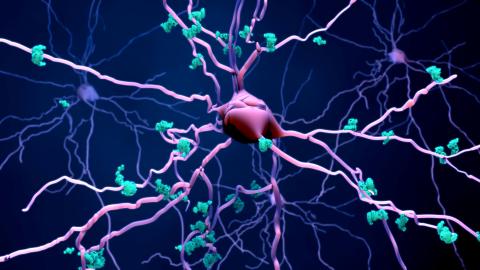
Genetic forms of Alzheimer's are considered to be those in which certain variants of a gene inevitably lead to the disease over time. Until now, only rare alterations in three genes were considered as such. A group of researchers led by the Hospital de Sant Pau in Barcelona has proposed a new, much more frequent form. After analysing data from more than three thousand donated brains and clinical data from more than ten thousand patients, they found that almost all people who carry two copies of the ApoE4 variant in the ApoE gene, which was previously only considered a risk factor, also end up developing the disease.They publish the results in the journal Nature Medicine.
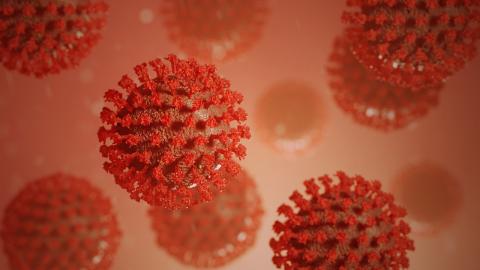
The UK Health Security Agency published in its latest report on 25 March the detection of three recombinant forms of omicron, called XE, XD and XF. The WHO mentions them in its 29 March report, noting that the possibility that XE is more transmissible than BA.2 still requires further study.
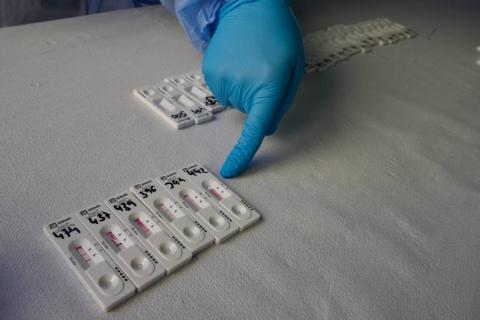
The WHO recommends keeping an eye on the BA.2 variant of Omicron because it is spreading, but it does not appear to cause more serious disease or escape vaccination. Don't be fooled by its evocative nickname: it is perfectly detectable. The misconception that tests do not identify it was propagated by a headline that was corrected.

A new variant of the coronavirus causing COVID-19 has been identified in South Africa, with numerous mutations present in other variants, including Delta. Variant B.1.1.529, as it is now called, appears to be spreading rapidly in South Africa. Attached is the rapid reaction of three Spanish researchers with expertise in genomic surveillance.