Luis Álvarez-Vallina

Luis Álvarez-Vallina

Luis Álvarez-Vallina
Position

Head of the Clinical Research Unit in Cancer Immunotherapy at CNIO-HMarBCN

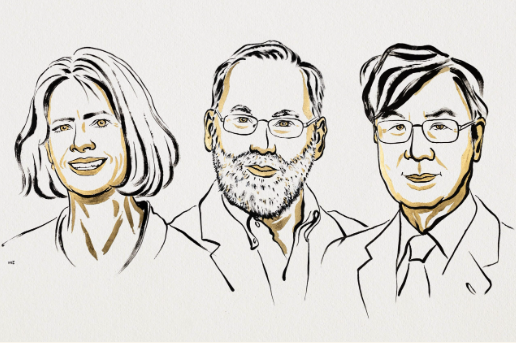
Nobel Prize in Medicine or Physiology awarded to Mary E. Brunkow, Fred Ramsdell and Shimon Sakaguchi for understanding how the immune system is kept under control without attacking organs

The Karolinska Institute has awarded the Nobel Prize in Medicine or Physiology to Mary E. Brunkow, Fred Ramsdell and Shimon Sakaguchi for describing how the immune system is regulated so as not to harm us. His groundbreaking discoveries on peripheral immune tolerance have spurred the development of new treatments for cancer and autoimmune diseases.

0

A drug eliminates aggressive cancers in a small clinical trial

Over the past 20 years, a class of cancer drugs known as CD40 agonist antibodies has shown great potential, but also limited impact in patients and adverse reactions. In 2018, it was demonstrated that they could be improved to boost their effectiveness and limit serious side effects. A study published in Cancer Cell reports the results of using one of these drugs in a small phase 1 clinical trial: out of 12 patients, all with different types of metastatic cancer, six saw their tumors shrink, including two in whom they disappeared completely.

0

A patient has been in remission from cancer for 18 years after CAR-T treatment as a child, the longest period ever described

A team of US researchers has followed some patients treated with CAR-T therapies in a small clinical trial conducted between 2004 and 2009 to treat children with neuroblastoma, a nerve cell tumor that can have a poor prognosis. At least one of them, a woman who was treated with CAR-T as a child, remains in remission 18 years later, the longest duration of such therapy described to date. The results are published in the journal Nature Medicine

0

CAR-T therapy tested to treat childhood brain tumours considered incurable

CAR-T cell-based treatments have been successful against some blood tumours, but are much less effective for solid tumours. A phase 1 clinical trial has tested their use in 11 children and young adults with diffuse midline glioma, a tumour of the nervous system that is considered incurable. The results, published in the journal Nature, indicate that the treatment improved functional status in nine of the 11 patients. One of the four who showed a strong response is still healthy four years later.

0

Reactions: immunotherapy clinical trial improves prognosis of a type of leukaemia in infants

A phase 2 clinical trial has analysed the safety and efficacy of adding immunotherapy to traditional chemotherapy to treat a subtype of acute lymphoblastic leukaemia in children under one year of age. This subtype of leukaemia, although rare in absolute terms, is the most common in children of this age, and its prognosis in this age group had not improved in recent years. The immunotherapy used, a bispecific antibody that binds to tumour cells on the one hand and T lymphocytes on the other, improved two-year survival from 66% to 93% in treated patients, according to The New England Journal of Medicine (NEJM).

0

Reactions to trial using CAR-T cells prepared from donors to treat multiple myeloma

Approved therapies to treat various tumours using CAR-T cells are based on the modification of the patient's own lymphocytes in the laboratory, which delays their administration. A phase 1 clinical trial has used ready-made donor cells to treat patients with multiple myeloma. The results are published in the journal Nature Medicine.

0

Reactions: two studies add circuitry to CAR-T cells to improve immunotherapy

Two preclinical studies published in the journal Science have introduced new bioengineered modifications to CAR-T cells in an attempt to make them more potent and safer in their anti-tumour action. These variations allow their activity to be enhanced only in the vicinity of the tumour or their actions to be regulated on demand.

0