An AI tool improves cancer screening in dense breasts
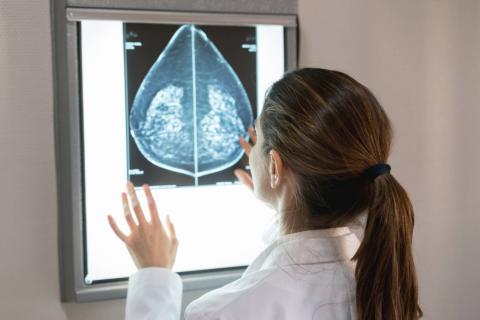
An artificial intelligence (AI) model trained on over 400,000 mammograms and analyzed in a separate sample of over 240,000 improved cancer risk prediction in cases of dense breasts, which are more common in young women or those with a low body mass index. This is an important factor in screening, especially because it can hinder tumor detection. The results are presented as an abstract, not yet peer-reviewed, at the annual meeting of the Radiological Society of North America.
Josefina - IA mamas (EN)
Josefina Cruz
Medical oncologist at the University Hospital of the Canary Islands in Tenerife and coordinator of the Prevention and Early Diagnosis section of the Spanish Society of Medical Oncology (SEOM)
In principle, this is a high-quality article. It presents a sample of over 400,000 mammograms performed on women in Europe and America, analyzed by an AI that has already received FDA approval for mammographic interpretation. It assesses the AI's predictive value for breast cancer compared to the increased risk associated with dense breasts and demonstrates that it better discriminates breast cancer risk using images that radiologists are unable to see at such an early stage. Dense breasts, which make early breast cancer detection more difficult on mammograms, are typically more common in young, premenopausal women.
The implications would be that, in young patients, where dense breasts are prevalent, AI could detect lesions early that standard screening mammograms cannot in this population. This would increase early breast cancer diagnosis in young women and lead to higher cure rates with less invasive treatments.
[Regarding potential limitations] Including this AI in screening programs for this population would require a cost-effectiveness assessment, taking into account the potential costs and the possibility of false negatives: after informing the patient that she may have cancer and that a biopsy should be attempted when feasible, a subsequent negative result should not overshadow the stress this can cause the woman. Furthermore, the lesions detected by the AI may not be visible to the human eye, requiring a biopsy study to confirm the diagnosis, which can create anxiety for women undergoing this process.
- Research article
- Non-peer-reviewed
- People