What are midwives and what specific training do they receive?
The International Confederation of Midwives (ICM) defines these professionals as persons who, having successfully completed a training programme in midwifery recognised in the country concerned, are legally registered and/or licensed to practise midwifery and use the title, demonstrating competence in the practice of the profession.
This field includes the support, care and advice necessary for women during pregnancy, childbirth and the postpartum period, to facilitate births under their own responsibility and to provide care for the newborn and the child. In addition, midwives are tasked with being health and education advisors to women and people of diverse genders, families and communities, and this can be extended to sexual and reproductive health.
‘They are essential figures who have an impact on motherhood and comprehensive care during all stages of a woman's life cycle: reproductive health, menopause and sexuality,‘ summarises Mª José Caravaca, president of the Federation of Midwives’ Associations of Spain (FAME), in statements to SMC Spain.
They are essential figures who have an impact on motherhood and comprehensive care during all stages of a woman's life cycle: reproductive health, menopause and sexuality
Mª José Caravaca
As pointed out in the report Development of the midwifery profession in Spain: challenges and recommendations presented by the Federation of Midwives' Associations of Spain (FAME) in February 2023, midwifery training has traditionally been heterogeneous, even in common environments such as the European Union.
In Europe, midwives receive university training and there are two ways to access this training: by completing a nursing degree and then specialising, or by directly accessing the midwifery degree. Germany, France, the United Kingdom and Italy do offer direct access, unlike Spain. Access to midwifery training in the European Union is regulated by Directive 2005/36/EC, as amended by Directive 2013/55/EC of the European Parliament and of the Council of 20 November 2013.
In Spain, access to the profession requires six years of academic training, as explained to SMC Spain by Mª Ángeles Rodríguez Rozalén, head of Institutional Relations at the Spanish Association of Midwives. After completing a university degree in nursing, students must pass the national exam for resident nurses (EIR), which is open to the public. In fact, it is the only nursing speciality in Spain that cannot be accessed through exceptional means.
What role do midwives play in women's sexual and reproductive health?
‘Midwives accompany women and families from affective-sexual education to beyond menopause,’ explains Mariví Cambredó, president of the Associació Catalana de Llevadores (Catalan Association of Midwives), to SMC Spain. “They defend the sexual and reproductive rights of women and families,” she adds.
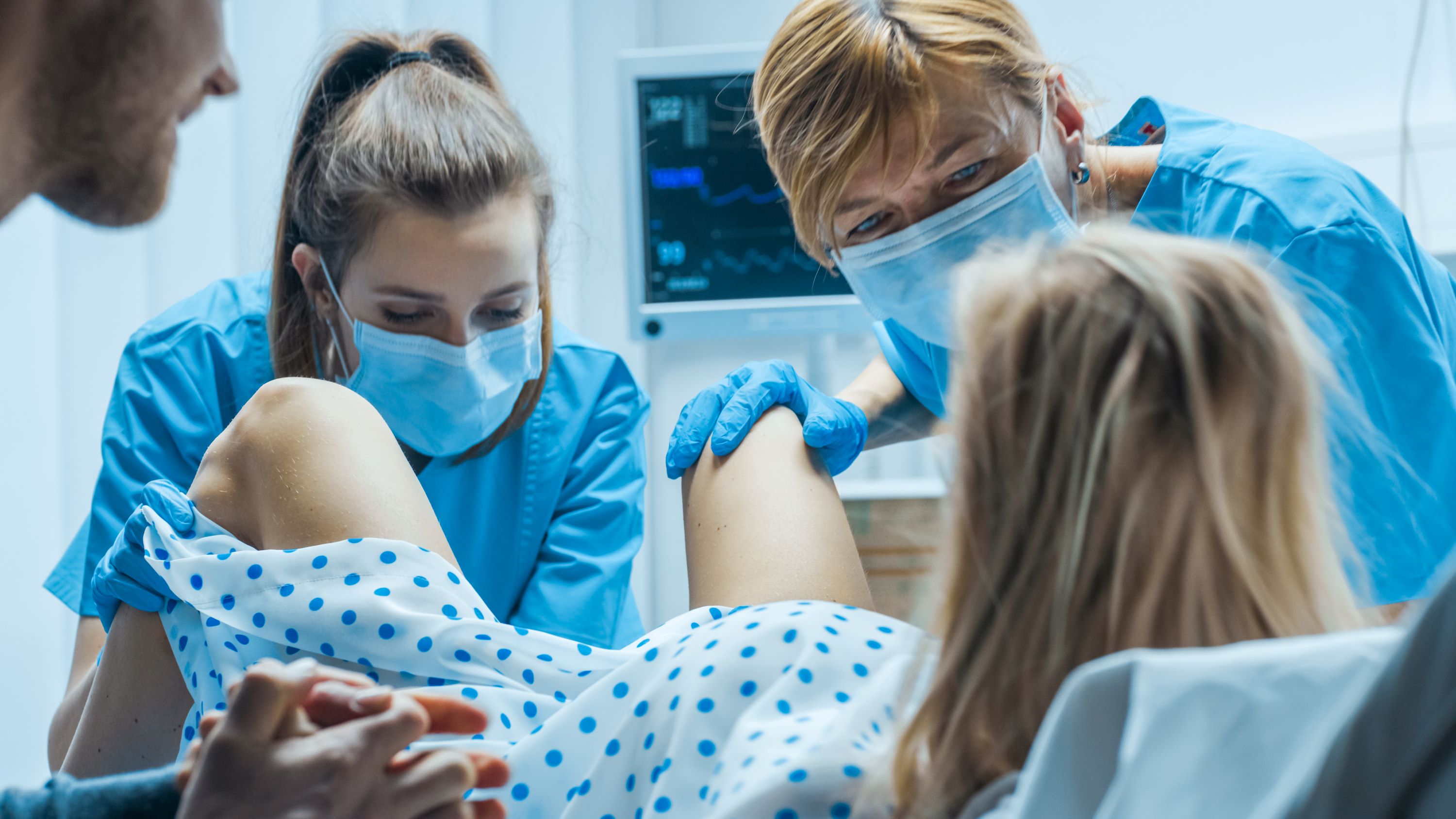
Their presence ‘is key’ to improving perinatal outcomes, reducing unnecessary interventions and promoting healthy practices, according to the board of directors of the Association of Midwives of the Community of Madrid. ‘Midwives have extensive expertise in pregnancy, childbirth and the postpartum period,’ explains the president of FAME. Caravaca points out that midwives supervise normal pregnancies, facilitate parental and childbirth preparation programmes, assess psychosocial aspects and are able to detect situations of gender-based violence in pregnant women. During childbirth, ‘they assist the mother and monitor the condition of the foetus in the womb using appropriate clinical and technical methods,’ she adds. They can also attend births ‘when they are vertex presentations’ and, in emergencies, breech births.
The professional also indicates the functions of midwives during the postpartum period: ‘They are competent to assist and monitor the mother's progress after childbirth and provide necessary advice on infant care.’ They provide care for the newborn and, if necessary, ‘take appropriate measures, such as immediate resuscitation.’
What kind of care do midwives offer beyond pregnancy?
‘The role of midwives is not limited to pregnancy,’ clarifies the board of directors of the Madrid Midwives Association, explaining that ’any woman, from puberty and adolescence to middle age, can and should see a midwife.’
Montserrat Angulo, a nurse specialising in gynaecology and obstetrics and deputy treasurer of the General Council of Nursing, lists other functions of midwives: providing information on sexuality throughout life, advising on contraceptive methods and the application and removal of some of them (IUDs, subdermal contraceptives), care during the climacteric and menopause, and guidance for women who wish to become pregnant.
The CGE spokesperson points out that midwives are also key figures in the prevention and detection of sexually transmitted infections, an area in which they offer ‘advice and support after diagnosis’ and actively participate in cervical cancer screening programmes and human papillomavirus (HPV) testing.
Due to differences in competences within the Spanish autonomous state, there is heterogeneity in the role, function and figures of midwives in the different autonomous communities. In Catalonia, midwives work as part of multidisciplinary teams in the ASSIR (Atenció a la Salut Sexual i Reproductiva) units, where they are responsible for healthcare in the ‘youth space’ and ‘collaborate with other health professionals to offer comprehensive and coordinated care to women and families,’ says the president of the Associació Catalana de Llevadores.
How many midwives are there in Spain?
According to the report The State of the World's Midwives published in January 2021 by UNFPA — the United Nations agency responsible for sexual and reproductive health —, the WHO and the ICM, in 2021 Spain had a ratio of 1.98 midwives per 10,000 inhabitants. The Spanish ratio is below that of its closest neighbours: Italy has 2.67 midwives per 10,000 inhabitants, Portugal 2.72, the Netherlands 2.45, Germany 2.99, Switzerland 3.23, France 3.52, the United Kingdom 6.59, Belgium 11.71 and Ireland 21.84.
According to the Statistics on Registered Healthcare Professionals for 2023 from the National Institute of Statistics (INE), our country has 10,286 nursing professionals with a midwifery qualification. However, the General Council of Nursing points out that its data confirms the existence of 8,084 registered midwives in Spain, more than 2,000 fewer professionals.
Using other indicators, such as the number of midwives per 10,000 women aged 14-65, Spain (6.1) also falls below the European median of 9.1, according to the CGE.
Montserrat Angulo is clear: ‘Spain would need more than 5,000 midwives to reach the European benchmark.’ According to the specialist nurse, this would optimally cover all the skills of the profession, including sexual and reproductive health care beyond pregnancy.
Spain would need more than 5,000 midwives to reach the European benchmark
Montserrat Angulo
The downward trend in the national and European context is in line with the international trend. According to the global report cited above, the world faces a shortage of 900,000 midwives.
Within Spain, the distribution of midwives varies between autonomous communities. As detailed in the analysis by FAME, while the Community of Navarre (with 24 midwives above the median) Cantabria (with 17) and Melilla (with 2) have a midwife ratio that is in line with or exceeds the European median (9.1 midwives per 10,000 women aged 14 to 65), Catalonia and Andalusia would need a large number of midwives — 1,002 and 881 midwives respectively — to reach the reference value.
Angulo explains that workforce recommendations and needs are usually measured in relation to ratios such as births, women or the population of childbearing age. However, as the president of FAME points out, midwives also provide care to families and women throughout their life cycle, ‘providing care beyond the age of 65’. Caravaca therefore asks that the calculation of midwife requirements not be limited to a specific age range or number of births in Spain: ‘This is a big mistake that affects thousands of women, newborns and families who are deprived of the care provided by these professionals.’
The spokesperson for the Spanish Association of Midwives stresses that thinking that the decline in the number of births means that fewer midwives are needed is a ‘very simplistic’ view: ‘We are starting from very low figures to meet real needs for many years’.
How do midwives differ from nurses without this specialisation?
The deputy treasurer of the CGE explains that midwives have two years of specialised training in a practical and theoretical programme. Angulo points out that this training distinguishes them from other nurses, who ‘have basic knowledge of women's healthcare’ gained in nursing degree programmes or in other specialised residencies.
How do midwives differ from doulas?
With regard to doulas, the Board of Directors of the Madrid Midwives Association explains that these figures offer emotional support, not healthcare. ‘They are not healthcare professionals and do not provide medical care,’ clarifies the president of FAME.
What are the main obstacles faced by midwives? And what are their most frequent demands?
‘The situation of midwives in Spain is very poor and the authorities cannot turn a blind eye to this issue,’ says Angulo. The deputy treasurer of the CGE points out that the main problems facing the profession are job insecurity and a shortage of professionals. She also warns of the consequences of this situation for patients: ‘It puts the health of all women in our country at risk, as they are deprived of quality care.’
Angulo also focuses on the quality of training in the profession, explaining that unofficial courses, workshops and training activities are becoming popular in order to specialise in obstetrics and gynaecology: ‘Many do not meet the requirements or the necessary training standards to be a midwife,’ says the CGE director.
The president of FAME states that the persecution and obstruction of midwives' practice and development is a “historical fact” that continues today. Caravaca points to the feminisation of the profession as one of the main causes: ’It is a group made up of more than 94% women.’
To understand this situation, she explains that during the period between the closure of midwifery schools in 1986 and the reopening of the EIR pathway in 1993, no new midwifery qualifications were issued ‘for almost ten years’. Caravaca adds that the current route into the profession makes it impossible to meet the demand for midwives in Spain, both current and accumulated during these years of stagnation.
FAME has identified three main demands with a view to improving the quality of care provided by the profession. One of these is the inclusion of a direct route to training for the midwifery profession through a university degree, in order to bring it into line with European educational programmes. They also call for legislative recognition of the possibility for midwives to prescribe medicines, pointing out that this is an ‘essential competence’ of the profession. Finally, they demand that the professional qualifications of midwives be recognised for their training and level of responsibility, in compliance with current legislation and with a view to expanding the scope of their work to include all their professional skills.
What is the situation for midwives in other countries or healthcare systems?
Angulo states that, in situations of conflict or natural disasters, midwives ‘play a vital role in protecting the rights of women and children.’ The deputy treasurer of the General Council of Nursing refers to the report reviewed in this article to explain that, even in places where data on midwives is available, it is rare to find it fully disaggregated by important characteristics such as gender, occupational group and geographical location, ‘which makes it difficult to identify and correct deficiencies in service provision’.
Regarding the situation of these professionals in developing countries, the president of FAME points out that ‘midwives face multiple challenges of great importance’ due to their direct impact on sexual, reproductive, maternal, neonatal and adolescent health, which has consequences for the ‘general well-being and development of these nations’. Caravaca highlights the inadequate working environment as the main cause of staff shortages, explaining that midwives suffer from a lack of support, insufficient resources, stigmatisation, discrimination and even gender-based violence. She also highlights the poor quality of education and training in the profession, explaining that this ‘undermines the skills, confidence and professional identity of midwives’ in their field of work.
Finally, the president of FAME points out that access to this medical service is unequal: ‘Several population groups are at risk of having their access to midwives hindered on grounds of age, poverty, geographical location, disability, ethnic origin, conflict situation, sexual orientation, gender identity or religion.’
Rodríguez Rozalén recalls that in developing countries, more than 260,000 women die each year from causes related to childbirth and lack of care, pointing out that ‘many are preventable’. The director of the Spanish Association of Midwives refers to the recommendations of the main international organisations — UNFPA, UNICEF and WHO — and states: ‘Investing in midwives is investing in health’.